
Hazmat Logistics: How to Manage Hazmat Shipping, Receiving and Storage
- By Cory Levins
- 3 nov 2021

Source: sonsart/Shuttershock.com
Summary:
- Hazardous materials must be properly labeled for safe identification and handling.
- Packaging must be rated for the safe transportation of hazardous materials according to the guidelines and the packing groups on the UN Dangerous Goods List.
- Warehouses and warehouse personnel must be certified to handle hazardous materials.
Dealing with hazardous products is a reality for many businesses. The list of hazardous materials is extensive and ranges from explosive materials to ordinary items like dry shampoo. Knowing the protocols for shipping, packaging and storing these materials is necessary for safe and legal hazmat logistics.
Hazmat Shipping
To ship hazardous products legally and safely requires an understanding of the key steps involved.
First, the hazardous material needs to be classified and labeled correctly. There are nine hazmat classifications:
- Explosives
- Gases
- Flammable Liquid and Combustible Liquid
- Flammable Solid, Spontaneously Combustible, Dangerous When Wet
- Oxidizer and Organic Peroxide
- Poison (Toxic) and Poison Inhalation Hazard
- Radioactive
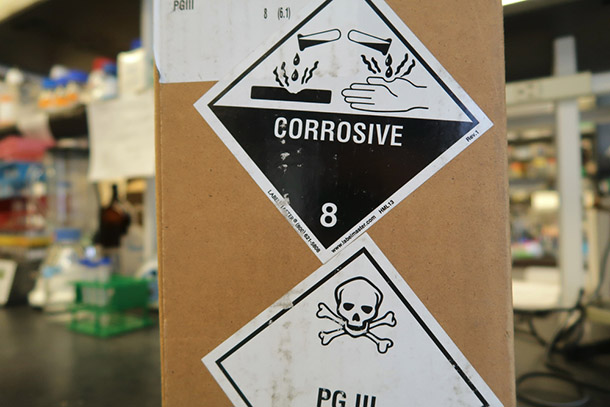
- Corrosive
- Miscellaneous
When shipping dangerous goods, the label on the package must correspond to the correct hazmat class. Before purchasing shipping materials for your hazardous products, ensure you review a comprehensive list of materials and their accompanying classifications.
You must ship hazardous materials based on the rules of the Department of Transportation and other agencies. One key regulation limits the materials that are allowed to be shipped together; this information can be found on the hazmat segregation table.
Labels must be visible on all sides of the packaging and unobstructed from view. Proper hazmat labeling serves three primary purposes:
- Communicate information and potential dangers associated with the substances contained.
- Inform personnel on how to handle the packages safely and the best way to store them, as per the hazmat segregation tables.
- If an incident occurs, labeling informs emergency responders, letting them choose the correct equipment and safety gear.
Check Out Our Hazmat Boxes for Sale
Red Herring/Shuttershock.com
Safe Hazmat Packaging
Using the right type of container for packing hazardous materials is critical for safety during transportation and handling. On top of the nine basic hazmat classes, the Code of Federal Regulations (49 CFR 173) outlines three packing groups: I, II and III.
Group I represents materials with a high potential danger level. Group II lists medium-danger items and Group III lists low-danger substances.
All hazardous materials are assigned a packing group on the UN Dangerous Goods List (UN DGL). Once you know the class and packing group, you must use the correct container type.
UN-rated containers may feature one of three ratings indicating the packing groups it can safely transport, listed on the UN code as follows:
- X can safely transport items in packing groups I, II and III.
- Y can safely transport items in packing groups II and III.
- Z can only transport items in packing group III.
The UN DGL may also list additional conditions and requirements, such as maximum quantities per inner packaging or specific packing instructions.
For instance, if you intend to ship bottles of ethyl formate, you must first check this substance’s assigned hazmat class and packing group. Ethyl formate is a Class 3 hazardous material listed on the UN DGL under packing group II. You can ship them in hazmat boxes with an X or Y packing group code but not a Z code.
Proper Storage
When storing hazardous materials in a warehouse, employees must be appropriately trained to handle the materials. Employees tasked with handling hazardous goods require training under law 49 CFR 172.704.
A warehouse may also be required to separate hazardous materials based on their classification and packaging group. This practice reduces the risk of hazards caused by accidental leakage or damage.
For example, corrosive liquids may be stored in the proximity of flammable gases but not of explosives. Learning the many rules associated with storing hazmat materials is essential for safety and legality. Segregation tables should be posted in warehouses with hazardous materials and understood by workers.
Source: FOTOGRIN/Shuttershock.com
Bulk Hazmat
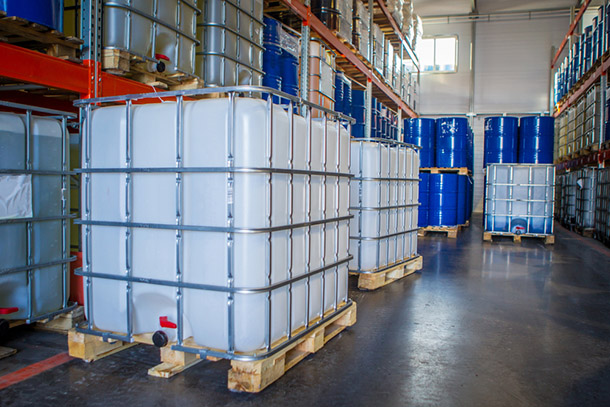
Hazmat logistics are further complicated by bulk hazmat storage and shipping. Warehouses often have to store and ship bulk quantities of hazardous materials. It is critical to abide by U.S. DOT guidelines for storing bulk hazmat in bulk packaging.
Bulk packaging is a freight container or transport vehicle into which the hazardous material is loaded with no intermediary form of packaging. Packaging should exceed 119 gallons for liquid material and 400 kg net mass for solid materials. These containers can include intermediate bulk containers or large totes.
Sourcing 275 gallon totes for sale from a reputable supplier is crucial to minimize the risk of leaks, spills and accidental injury in the workplace.
Shop 275 Gallon Totes for Sale Here
Ship and Store with Confidence with Air Sea Containers
Hazmat logistics is a serious process that requires training, expertise and high-quality products like custom shipping boxes. Air Sea Containers provides warehouses with the required shipping containers and bulk storage totes needed for hazardous materials. When used in combination with the regulations and processes required to handle all stages of hazmat logistics, a warehouse can be confident in its safety and legality.


