
Hazmat Placarding Guide: When and How to Label Cargo
- By Cory Levins
- 8 feb 2022

Source: Albert Stephen Julius/Shutterstock.com
Summary:
- The DOT lists nine hazmat classes with corresponding labels/placards.
- Hazmat labels/placards are signs that convey information regarding hazardous materials.
- There are regulations regarding the use of labels and placards you must follow.
- Preparing a shipper’s declaration is legally required for safe handling.
According to the United States Department of Transportation (DOT), you need to follow specific regulations regarding using and placing hazmat placards and labels when shipping dangerous goods. Learn more about the different hazmat classes and requirements to maximize safety through this hazmat placarding guide.
What Is Hazmat?
Hazmat is short for hazardous materials and includes everything from flammable and combustible liquid fuels, explosives and poisonous gases to radioactive materials and corrosive agents. The U.S. DOT lists nine hazmat classes for identification purposes:
- Class 1: Explosives
- Class 2: Gases
- Class 3: Flammable Liquid and Combustible Liquid
- Class 4: Flammable Solid, Spontaneously Combustible and Dangerous When Wet
- Class 5: Oxidizer and Organic Peroxide
- Class 6: Poison (Toxic) and Poison Inhalation Hazard
- Class 7: Radioactive
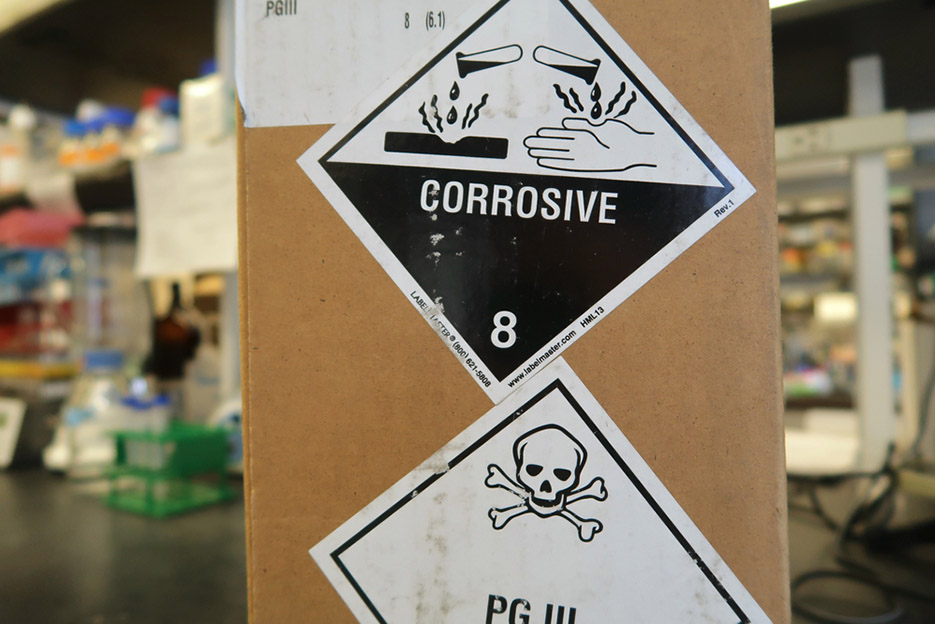
- Class 8: Corrosive
- Class 9: Miscellaneous
Source: Red Herring/Shutterstock.com
Hazmat Labels
A hazmat shipping label is a diamond-shaped pictographic sign containing words, numbers and symbols that signify the hazardous contents of the package. Hazmat warning labels fulfill the following purposes:
-
Universal communication
By using a combination of colors, markings, words and letters on a high-contrast background, these labels allow for the international and multilingual communication of risk.
-
Safe handling
Hazmat labels provide clear instructions regarding the safe handling of dangerous goods.
-
Stowage requirements
Identification of shipments containing hazardous materials is essential for safely storing dangerous goods aboard semi-trailer trucks, airplanes, rail cars and cargo ships.
-
Emergency response methods
Hazmat placards allow emergency services to determine appropriate response methods if an accident occurs. Placards also allow transport workers and bystanders to accurately report hazmat risks to first responders.
See Our Shipper’s Declaration of Dangerous Goods Form Options
How to Apply Hazmat Labels
When preparing your package for shipment, you need to follow several DOT requirements for dangerous goods marking and labeling.
-
Markings
Markings must be in English, durable and printed on, or affixed to, the surface of a package containing hazardous materials. Alternatively, the marking may be on a label, tag or sign. The marking must be on a high-contrast color background, must not be obscured by attachments or other labels and cannot be located near another marking that could distract from it.
-
Labeling
Print or attach the label to a surface of the package that contains the hazardous materials. Avoid placing it on the bottom of the package or device where it is less visible.
The label should be located on the part of the package nearest the shipping name marking. If the package contains multiple hazmat materials, place the subsidiary (or secondary) hazmat label within six inches of the primary hazard label.
As visibility is critical, you must place the label against a high-contrast background. You should also ensure that the labels you use comply with the DOT’s dimensional, color and durability specifications.

Source: Lawrence Glass/Shutterstock.com
Hazmat Placards
A hazmat placard is located outside bulk packaging or shipping containers and alerts the public and emergency services to the presence of hazardous chemicals. Placards usually use the same design as the shipping labels but are larger and more durable for use on trucks, train cars and cargo ships.
The vinyl placard must withstand exposure to rain, sunlight and temperature extremes while remaining legible. There are several regulations regarding the display and visibility of hazmat placards, per 49 CFR § 172.516.
Browse Our Selection of Hazmat Placards
Shipping Declarations
When shipping dangerous goods, whether by land, sea or air, the sender is legally required to prepare a shipper’s declaration of dangerous goods form. This form certifies that the sender has packaged, labeled and declared the shipment according to International Air Transport Association (IATA) regulations.
Attach this form to your package so the carrier knows how to handle your shipment. At Air Sea Containers, we supply several shipper’s declaration of dangerous goods form options, depending on your intended shipping method.
Find the Placards and Shipping Labels You Need for Safe Transport
At Air Sea Containers, we understand the importance of proper labeling to ensure the safety and security of your shipments. These practices also protect warehouse and transport personnel handling your goods.
For more information regarding hazardous material categorization, browse our full selection of placards and hazmat packaging options. We sell a wide variety of products for protecting your shipments in transit, whether or not they’re hazardous.


