How to Read Hazmat Placard's Meanings
- By Cory Levins
- 26 feb 2020

Hazmat placards are a key part of transporting hazardous materials safely. They offer a simple and effective way to communicate critical information about which materials are being transported and the risks that they pose. Anyone who handles or works around hazardous materials should be able to identify their placards and what they mean.
How can you look at a hazmat placard and understand its meaning? This guide will show you how to identify each one and use it to make safer and more informed decisions about working with hazardous materials.
The UN hazmat classification system defines nine categories of hazardous materials. Each of these categories has its own set of placards that identifies it and the properties of the materials inside. And while each individual material will have additional DOT and UN regulations that can’t be directly communicated through a placard, knowing how to identify and read each type of hazmat placard will help you stay safe when working around hazardous materials.
Next, we’ll talk a little bit about each type of hazmat placard and how to identify them by their colors, designs and numbers.
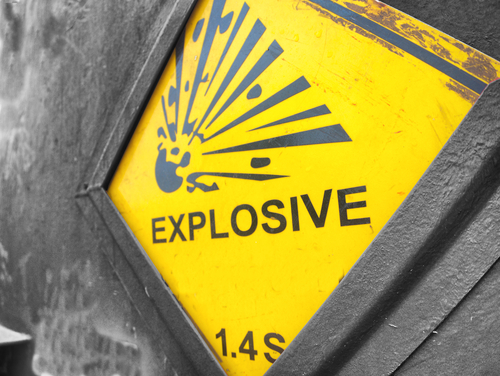
Class 1 hazmat placards are for explosives such as TNT, ammunition, fireworks and airbag inflators. These placards are yellow-orange in color and will have one of six sub-categories listed:
Each placard may also have a letter that indicates the material’s compatibility group, or which substances are safe to transport with it.
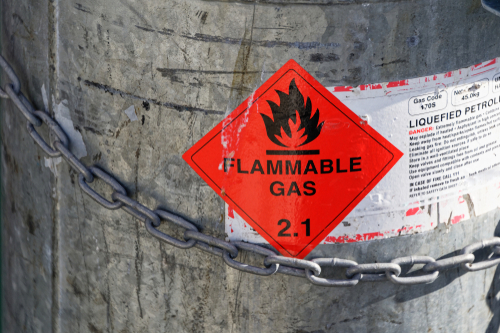
Class 2 hazmat placards are for items containing gases, such as fire extinguishers, aerosols, propane tanks and gas cartridges. These placards can be any of several different colors, and each has a different meaning:
Class 3 hazmat placards are for flammable liquids, such as gasoline, paint, acetone and kerosene. They are bright red in color and may say either “Flammable” or “Combustible.”
Class 4 hazmat placards are for flammable solids such as matches, powdered metals and activated carbon. They have three different color schemes:
Class 5 hazmat placards are for oxidizing substances and organic peroxides such as ammonium nitrate fertilizer and chemical oxygen generators. They have two different color schemes and sub-categories:
Class 6 hazmat placards are for toxic and/or infectious substances such as regulated medical waste, tear gas and strong poisons such as cyanides and neonicotinoids. They have two design schemes:
Class 7 hazmat placards are for radioactive substances such as medical isotopes and radioactive ore. They have a yellow top that features the international symbol for radiation and a white bottom.
Class 8 hazmat placards are for corrosive chemicals such as strong acids, lye and certain dyes and paints. They have a white top with an illustration of a chemical burning a human hand and a black bottom.
Class 9 hazmat placards are for other miscellaneous hazardous substances such as dry ice and lithium ion batteries. These placards have a black and white striped top half and a white bottom.
Hazardous materials are assigned specific numbers by the UN classification system. The NA classification system is also used in North America. UN and NA numbers are identical, but some substances that don’t have UN numbers may have NA numbers.
Some of the most commonly-used UN/NA numbers include:
Placards in any one of the nine categories may include the substance’s UN/NA number instead of or in addition to words and pictograms. See the full UN hazmat number list for complete information on each substance’s hazmat number.
Air Sea Containers is an easy one-stop-shop for hazmat placards and hazmat labels, with durable vinyl placards that are resistant to chipping and fading and meet or exceed all DOT hazmat placard standards. Call (866) 596-9448 or contact us online for more information on the latest in hazmat shipping solutions.
Shop Our Selection of Hazmat Shipping Placards
How can you look at a hazmat placard and understand its meaning? This guide will show you how to identify each one and use it to make safer and more informed decisions about working with hazardous materials.
What Are the Hazmat Classes?
The UN hazmat classification system defines nine categories of hazardous materials. Each of these categories has its own set of placards that identifies it and the properties of the materials inside. And while each individual material will have additional DOT and UN regulations that can’t be directly communicated through a placard, knowing how to identify and read each type of hazmat placard will help you stay safe when working around hazardous materials.
Next, we’ll talk a little bit about each type of hazmat placard and how to identify them by their colors, designs and numbers.
Hazard Class 1 Placards
Class 1 hazmat placards are for explosives such as TNT, ammunition, fireworks and airbag inflators. These placards are yellow-orange in color and will have one of six sub-categories listed:
- 1: Mass Explosion Hazard
- 2: Mass Projection Hazard
- 3: Fire/Minor Blast/Minor Projection Hazard
- 4: Minor Explosion Hazard
- 5: Blasting Agent
- 6: Very Insensitive Materials
Each placard may also have a letter that indicates the material’s compatibility group, or which substances are safe to transport with it.
Hazard Class 2 Placards
Class 2 hazmat placards are for items containing gases, such as fire extinguishers, aerosols, propane tanks and gas cartridges. These placards can be any of several different colors, and each has a different meaning:
- Green: Non-Flammable Gas
- Red: Flammable Gas
- White: Toxic Gas
- Yellow: Oxygen Gas
- White with Black Skull Inset: Inhalation Hazard
Hazard Class 3 Placards
Class 3 hazmat placards are for flammable liquids, such as gasoline, paint, acetone and kerosene. They are bright red in color and may say either “Flammable” or “Combustible.”
Hazard Class 4 Placards
Class 4 hazmat placards are for flammable solids such as matches, powdered metals and activated carbon. They have three different color schemes:
- Red and White Stripes: Flammable Solids
- Upper Half White, Lower Half Red: Spontaneously Combustible Solids
- Blue: Water-Reactive Solids
Hazard Class 5 Placards
Class 5 hazmat placards are for oxidizing substances and organic peroxides such as ammonium nitrate fertilizer and chemical oxygen generators. They have two different color schemes and sub-categories:
- 1/Yellow: Oxidizer
- 2/Red Top, Yellow Bottom: Organic Peroxide
Hazard Class 6 Placards
Class 6 hazmat placards are for toxic and/or infectious substances such as regulated medical waste, tear gas and strong poisons such as cyanides and neonicotinoids. They have two design schemes:
- White: Toxic
- White with Black Skull Inset: Inhalation Hazard
Hazard Class 7 Placards
Class 7 hazmat placards are for radioactive substances such as medical isotopes and radioactive ore. They have a yellow top that features the international symbol for radiation and a white bottom.
Hazard Class 8 Placards
Class 8 hazmat placards are for corrosive chemicals such as strong acids, lye and certain dyes and paints. They have a white top with an illustration of a chemical burning a human hand and a black bottom.
Hazard Class 9 Placards
Class 9 hazmat placards are for other miscellaneous hazardous substances such as dry ice and lithium ion batteries. These placards have a black and white striped top half and a white bottom.
UN/NA Hazmat Numbers
Hazardous materials are assigned specific numbers by the UN classification system. The NA classification system is also used in North America. UN and NA numbers are identical, but some substances that don’t have UN numbers may have NA numbers.
Some of the most commonly-used UN/NA numbers include:
- 1090: Acetone
- 1203: Gasoline
- 1230: Methanol
- 1263: Paint
- 1789: Hydrochloric acid
- 1824: Sodium hydroxide (lye)
- 3318: Ammonia solution
Placards in any one of the nine categories may include the substance’s UN/NA number instead of or in addition to words and pictograms. See the full UN hazmat number list for complete information on each substance’s hazmat number.
Hazmat Placards from Air Sea Containers
Air Sea Containers is an easy one-stop-shop for hazmat placards and hazmat labels, with durable vinyl placards that are resistant to chipping and fading and meet or exceed all DOT hazmat placard standards. Call (866) 596-9448 or contact us online for more information on the latest in hazmat shipping solutions.
Shop Our Selection of Hazmat Shipping Placards