
How Safe Are Biohazard Pouches?
- By Cory Levins
- 26 feb 2018

If you transport medical samples as part of your business, you’ll understand the importance of safe and secure biohazard pouches to transport blood and other pathology substances. This ensures not only the security and integrity of the samples but also maintains the safety of anyone who may come into contact with the pouches, such as couriers or airport ground staff.
The specialized transport of samples deemed to be a biohazard — blood, body fluids, tissue samples and organs — is a heavily legislated process. This means that if you handle biohazard samples for shipping and delivery, you need pouches and products that you can depend on. So what specific design elements make up a safe biohazard pouch?

There are very clear rules with regards to the shipping of infectious materials and samples. Anyone who handles category A and Category B infectious samples must follow the triple-layer system when packaging their samples.
Category A infectious materials are classified by the United Nations (UN) as any sample containing a microorganism, such as bacteria or virus, that is known to cause disease in humans and animals. The UN defines other biological samples or medical waste that do not fit into category A as Category B infectious samples.
The triple-layer system means samples are wrapped in a leak-proof primary receptacle, such as a universal sample tube or blood bottle. This primary receptacle is then wrapped in an absorbent material that is sufficient to absorb the entire contents of the primary container should it break. The sample plus the absorbent material is then contained within a secondary layer.
The secondary layer should also be leak-proof and consists typically of a sealable plastic bag or pouch. The plastic used for biohazard pouches is Low-density Polyethylene (LDPE) — a very robust, waterproof and chemical-resistant material. A rigid outer shell completes the three-layer system for packaging infectious samples. To make life easier, bio pouch specimen kits are available containing all the components required to comply with current shipping legislation for infectious samples.
Biohazard pouches must be robust enough to contain any leakage from the samples inside. Most airlines require that the pouch also be able to withstand changes in pressure. Many bags are designed specifically with this in mind, and resistant materials such as LDPE are used for this reason. These pouches must be able to withstand pressures of 95 kPa without leaking; this is roughly equal to almost double atmospheric pressure, or the same as the pressure within a pressure cooker.
The International Air Transport Association (IATA) also stipulates that packaging for category A and B infectious samples must pass the following additional tests:
These regulations ensure that even if samples do break during transport, anyone who handles the samples and the packaging is not at risk from any leakage of the contents.
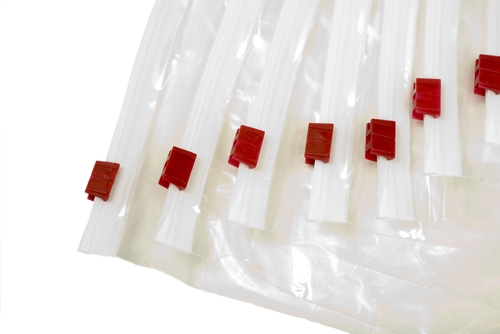
When transporting medical and pathological samples, it’s vital that the samples are secure and any attempts at tampering are immediately evident. Biohazard pouches have a single-use seal, which is sealed once the samples are in the pouch and cannot be reopened without damaging the pouch itself.
The IATA regulations mean that it is very unlikely the packaging will tear, so any tampering will be evident if someone tries to access the samples. This can be particularly important for evidentiary samples that are collected for the police to ensure that chain of custody is maintained. Some companies have made a feature of this secure seal because it is so important to certain industries, resulting in the BioZip patented single-use seal.
These biohazard pouches often have a designated area to cut with scissors to open the pouch once it arrives at its destination. Receiving a pouch with this seal intact means the contents are complete and secure.
The IATA clearly states that all samples should be labeled either individually or on an itemized contents list within the secondary container. The contact details of the recipient and/or the emergency contact person should be visibly written either inside the packaging or on the external box. This ensures that, in the event of damaged parcels or samples, the relevant people can be contacted and any risks to anyone who handled the parcel fully assessed.
It is also a clear stipulation in most countries that packages are labeled with a biohazard 6 label (pictured above) for category A infectious samples or a UN 3373 label for category B infectious samples. To reduce the risk of samples being held for checks at airports, certain suppliers mark their packaging materials as UN compliant. The symbol is widely recognized, and if the packaging instructions are followed, using packaging from one of these suppliers should ensure you are UN compliant.
The specialized transport of samples deemed to be a biohazard — blood, body fluids, tissue samples and organs — is a heavily legislated process. This means that if you handle biohazard samples for shipping and delivery, you need pouches and products that you can depend on. So what specific design elements make up a safe biohazard pouch?
Triple-layer packaging
There are very clear rules with regards to the shipping of infectious materials and samples. Anyone who handles category A and Category B infectious samples must follow the triple-layer system when packaging their samples.
Category A infectious materials are classified by the United Nations (UN) as any sample containing a microorganism, such as bacteria or virus, that is known to cause disease in humans and animals. The UN defines other biological samples or medical waste that do not fit into category A as Category B infectious samples.
The triple-layer system means samples are wrapped in a leak-proof primary receptacle, such as a universal sample tube or blood bottle. This primary receptacle is then wrapped in an absorbent material that is sufficient to absorb the entire contents of the primary container should it break. The sample plus the absorbent material is then contained within a secondary layer.
The secondary layer should also be leak-proof and consists typically of a sealable plastic bag or pouch. The plastic used for biohazard pouches is Low-density Polyethylene (LDPE) — a very robust, waterproof and chemical-resistant material. A rigid outer shell completes the three-layer system for packaging infectious samples. To make life easier, bio pouch specimen kits are available containing all the components required to comply with current shipping legislation for infectious samples.
Sealed samples
Biohazard pouches must be robust enough to contain any leakage from the samples inside. Most airlines require that the pouch also be able to withstand changes in pressure. Many bags are designed specifically with this in mind, and resistant materials such as LDPE are used for this reason. These pouches must be able to withstand pressures of 95 kPa without leaking; this is roughly equal to almost double atmospheric pressure, or the same as the pressure within a pressure cooker.
The International Air Transport Association (IATA) also stipulates that packaging for category A and B infectious samples must pass the following additional tests:
- Can be dropped from 9 meters without leakage.
- Can withstand temperatures from -40 to 55°C.
These regulations ensure that even if samples do break during transport, anyone who handles the samples and the packaging is not at risk from any leakage of the contents.
Secure, single-use seal
When transporting medical and pathological samples, it’s vital that the samples are secure and any attempts at tampering are immediately evident. Biohazard pouches have a single-use seal, which is sealed once the samples are in the pouch and cannot be reopened without damaging the pouch itself.
The IATA regulations mean that it is very unlikely the packaging will tear, so any tampering will be evident if someone tries to access the samples. This can be particularly important for evidentiary samples that are collected for the police to ensure that chain of custody is maintained. Some companies have made a feature of this secure seal because it is so important to certain industries, resulting in the BioZip patented single-use seal.
These biohazard pouches often have a designated area to cut with scissors to open the pouch once it arrives at its destination. Receiving a pouch with this seal intact means the contents are complete and secure.
Clear labeling
The IATA clearly states that all samples should be labeled either individually or on an itemized contents list within the secondary container. The contact details of the recipient and/or the emergency contact person should be visibly written either inside the packaging or on the external box. This ensures that, in the event of damaged parcels or samples, the relevant people can be contacted and any risks to anyone who handled the parcel fully assessed.
It is also a clear stipulation in most countries that packages are labeled with a biohazard 6 label (pictured above) for category A infectious samples or a UN 3373 label for category B infectious samples. To reduce the risk of samples being held for checks at airports, certain suppliers mark their packaging materials as UN compliant. The symbol is widely recognized, and if the packaging instructions are followed, using packaging from one of these suppliers should ensure you are UN compliant.


