
Breaking Down Last Mile Logistics
- By Cory Levins
- 13 dic 2017

Last mile logistics has risen to the forefront of many industries with the ascendance of online shopping. Enterprises involved in transportation, supply chain management, and e-commerce are increasingly aware of the importance of the final stage of product fulfillment.
Now more than ever before, customers know exactly what they want and have high expectations about how quickly their goods and services are delivered.
Of course, last mile logistics isn’t limited to online shopping fulfillment. Businesses that sell and deliver products to other companies continue to enhance the efficiency as well.

What Is Last Mile Logistics?
The phrase “last mile logistics” is a relatively new term. Far from being a buzzword, the term refers to the last stage of the supply chain: the movement of goods from a transportation hub to their final destination – typically the customer’s business or home.
 Rather than being a literal mile, products often travel hundreds or thousands of miles from their last delivery hub to their final destinations.
 Historically, the term referred to the movement of goods from railway freight hubs to their endpoint. However, the “last mile” now includes transportation by road, air, train, and other methods as well. Even bicycle delivery has historically played a role in last mile logistics in the consumer sphere.
The last mile is considered a challenging aspect of managing the supply chain, because up until that point, the product is being shipped as a unit. The logistics of moving goods from a transport hub to multiple smaller destinations is more complex than any other stage of delivery.
This phase of transportation is costly and often fraught with congestion and delays. Whether successful or poorly executed, the last mile has a significant impact on overall customer satisfaction.
With the continuing popularity of online ordering, the value of last mile logistics has increased exponentially. The expectations are that it will continue to trend upward.
Successes in Last Mile Logistics
There are aspects of the last mile of supply chain management, which have succeeded over the past few decades.
Enterprises have a great deal of experience working in the last mile within the business-to-business sphere. With a few exceptions, fulfillment to other businesses is an activity at which most shippers are now well-practiced. In fact, the delivery of products from one business to another has been finely tuned.
Similarly, there have been significant advances in last mile logistics across international borders. Individuals and businesses no longer anticipate month-long wait times like they would have had in the past. This is largely attributable to improvements in trans-border processes and decreased customs delays spurred by increased volumes and customer demand.
Challenges in Last Mile Logistics
One of the largest challenges faced in last mile logistics is cost-cutting. Keeping the cost of this stage of transportation as low as possible without lengthening delivery times is a challenge that most enterprises face.
Increasing the efficiency of the last mile is another challenge. Finding measures to improve delivery speed, especially using new technologies, is of growing interest within the supply chain.
In the context of individual e-commerce, there are substantial challenges related to delivering packages to private homes. Unlike businesses, residential addresses are often unoccupied during business hours.
There are also concerns about packages being damaged by weather, animals, and the risk of theft. corrugated boxes and paper envelopes potentially containing high-value item are often targets for thieves.
Specific products, of course, present logistical challenges in the last mile as well. Temperature-controlled packaging and fragile items are two prominent examples. Expediting the speed of delivery while sacrificing quality does no favors to the sender nor the recipient.
Customer Service and Perceptions of Delivery
The crux of last mile logistics is that it severely impacts the perceptions of customers of the quality of their purchases and the enterprise sending them.
A responsive, timely delivery with real-time updates and limited inconveniences increases customer satisfaction and improves customer retention.
This increases revenue and brand satisfaction, and is an important influence on online reviews of businesses, brands, and products.
Issues in Global Transportation and Delivery
Companies that ship and deliver goods worldwide face unique challenges in succeeding at last mile logistics. An example of this is businesses that import large quantities of goods from China for sale in the United States.
While highly experienced in intermodal transportation, many companies do not have a firm grasp on what happens after their containers reach the continent of their final destination. Businesses that succeed at high-quality and efficient delivery from this point will succeed where others fail.
Developing delivery systems overseas that are responsive to customer needs is a challenge that all companies face, regardless of location.
Additional challenges are presented in countries with low populations and large land masses, along with significant consumer and business demands for goods – such as in Canada and large portions of the populated rural United States. These have an astronomical cost regarding the last mile of fulfillment that is not easily reduced.
Client Demand for Proof of Delivery
 Historically, proof of delivery has been something that both business clients and individual customers have demanded. This demand is higher than ever.
 Innovation in proof of delivery is ongoing. These mostly relate to signature capture, which historically required a signature using pen and paper in the presence of the delivery person.
Presently, electronic signatures are widely used. However, future innovations in the way of a signatures in lieu of the physical presence of a delivery person are poised to disrupt this technology once again.
What Your Clients Need When They Need It
Last mile logistics is central to customer satisfaction and retention. This is true whether your customers are businesses, organizations, or private individuals. Even the most ideal of products at a spectacular price point will fail to satisfy if delivery is unsatisfactory.
Customer demands are perhaps greater than ever before, and expectations regarding product delivery are high. More than a quarter of customers, on average, are willing to pay substantial additional fees for same-day shipping.
These statistics demonstrate the value that customers place on the last mile, and on efficient order fulfillment in particular. Consumer demands for a speedy delivery will only increase.
This trend is even more significant with millennials, who have been raised in an era of on-demand products and services and are unaccustomed to waiting for orders to arrive.
Latest Trends in Last Mile Logistics
Recently, there have been many new developments in the last mile of the supply chain.
The locker innovation circumvents many of the significant challenges of last mile delivery, such as package theft, weather damage, and delays in pickup due to a mismatch between customer availability and delivery hours.
Automated shipping and the use of automated parcel delivery terminals are of increasing interest in the e-commerce space and have been used successfully in Germany, the United Kingdom, and across the rest of Europe.
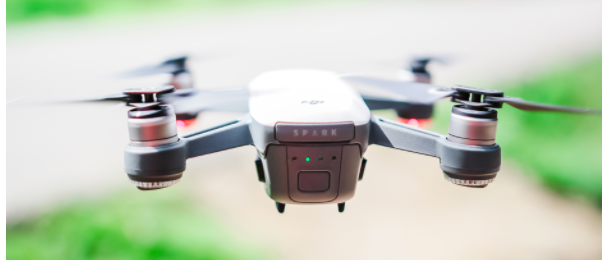
A new development in the field of last mile logistics is the integration of drones into customer delivery for quicker delivery times.
Hub Locations: Changing Trends
Another big change within the logistics sphere is the location of warehouses, the starting point of the last mile.
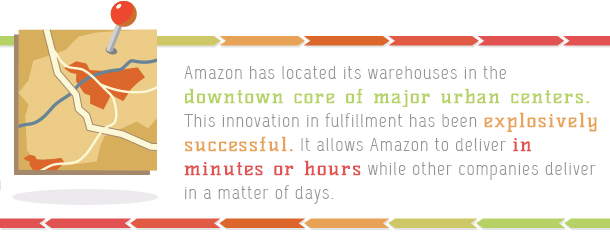
This change has been led almost entirely by Amazon, which has located its warehouses in the downtown core of major urban centers.
This makes products quickly accessible for speedy fulfillment. It runs counter to what most other retailers have done historically: building warehouses outside of cities, where warehouse space is less expensive per square foot.
This innovation in fulfillment has been explosively successful. It allows Amazon to deliver in minutes or hours while other companies deliver in a matter of days.
Are Drones the Future of Last Mile Logistics?
Perhaps the most talked-about innovation within the field of supply chain management is the integration of autonomous vehicles into the last mile. A prime example of this is drones.
Founded in 2016, Amazon Prime Air promises to deliver packages under 5 pounds in weight within 30 minutes, directly to consumers using autonomous drone technology. Although not currently in use, initial trials have begun within the United Kingdom.
The appeal of drones in last mile logistics is immediately apparent. They allow for near- instantaneous on-demand delivery, decreased labor costs, and integrated real-time tracking technologies.
Similarly, there has been considerable buzz over the use of autonomous vehicles, a.k.a. self-driving cars, for commercial delivery purposes. However, as of November 2017, no commercial enterprise has promised to make this idea a reality.
With the ascendance of extensive automation and the integration of robotics into commerce, it is clear that we can expect almost unthinkable levels of innovation in last mile logistics within the next decade or two.
Other Tech Innovations in the Last Mile
Drones are far from being the only new technology to enhance the last mile phase of the supply chain.
Increasingly, a range of tracking technologies are being used to track shipments and packages for businesses and individual consumers.
More than ever before, the expectation of efficient delivery and real-time information about the whereabouts of shipments is an expectation of the discerning consumer. These expectations are being met by a slew of apps and smart tracking devices.
Whether you are shipping plastic drums for your business or ordering earrings from an online retailer as a consumer, both the shipper and the recipient are likely to use real-time tracking to find the exact location of their package and anticipate the time of its arrival.
Crowdsourcing the Last Mile: What You Need to Know
The most significant current disruption in last mile delivery to individual consumers is crowdsourcing.
The explosive increase in the number and popularity of crowdsourcing apps, such as Postmates and Amazon Flex, is a testament to the market need for on-demand delivery.
Though less efficient in terms of route and variable in terms of quality, these apps increase delivery speed – a driving force behind their popularity. They also decrease the demand and therefore the need for infrastructure like delivery trucks, meaning the more efficient use of existing vehicles.
These apps only work in a major urban center across North America and Europe. The limited geographic extent of crowdsourced last mile delivery options means that for now, they are relatively limited in their impact.
Improving Last Mile Logistics with Data Analytics
Increasingly, businesses are compiling information and statistics from the last mile of the supply chain. Data on delivery, locations, and times is essential to quality improvement. This data comes from a variety of sources, and, in recent years, is increasingly compiled from smart technology sources, such as real-time tracking and sensors in the packages themselves.
Data analysis can provide critical insights into roadblocks along the last mile, and offer hints at solutions to improve speed of delivery, quality, and client satisfaction. It can also be used to set performance targets and compare them against selected measures of performance.
Data on delivery times and quality indices coupled with information on costs can also help businesses reduce their expenses in this area. Given the relatively high cost of the last mile in the overall supply chain, these savings can be quite significant.
Technology Prevents Delays in Delivery
Last mile logistics is incorporating technology to decrease delays in other ways as well.
In the current paradigm of delivery drivers in vehicles visiting physical locations, real data points on delivery locations, and volumes can be used to optimize delivery routes and the use of labor resources for drivers. An example of this is United Parcel Service (UPS) routing software for delivering packages.
Historically, the company had given drivers the shortest possible route but now use other criteria to optimize deliveries. Routes supplied to the drivers now eliminate left turns at a total savings of 10 million gallons of fuel per year, while increasing capacity by 350,000 packages, and reducing 1,100 trucks from the fleet.
Information on potential delivery disruptors can also be used to prevent delays in the last mile. Examples of these include extreme weather conditions and delays in traffic. In the event of disruptions, a contingency plan can be put in place, and customers can be promptly updated on delivery times.
Last Mile Logistics and Your Business
Excelling in the last mile of the supply chain puts your business at a significant competitive advantage over others competing in the same space.
Speed is not the only consideration. However, decreasing the processing times for customer orders to be fulfilled will put your enterprise at a competitive advantage over those that have not yet begun to enhance the last mile of the supply chain as a focus area for business growth.


