
The Ultimate Guide: 7 Common Types of Absorbents and Uses
- By Cory Levins
- 4 oct 2019
Whether it’s a chemical spill on the factory floor, a puddle of water in the office hallway or moisture creeping into packaged goods, liquids and moisture in the wrong places can wreak havoc on a business. Slip-and-fall injuries in the workplace are a leading source of both workers’ compensation payouts and missed days from work, and hazardous material spills can be even worse. Containing fluid migration and buildup is also critical to ensure that the products are protected in transit and in storage.
Air Sea Containers has a 25-year track record of success in providing the best solutions for both and workplace safety. That means we also have expert knowledge of which types of absorbents are most effective for which applications. This guide to eight types of commonly used absorbents will help you select the right ones when you’re shopping for absorbents—and Air Sea’s selection will help you get the best quality at a price you can afford.
Before we jump into the numerous kinds of absorbents available, let’s take a moment to consider why this category of products is necessary for many businesses. Having the right absorbent on hand can save the day in many different common situations, including:
Because most businesses are likely to encounter one or more of these problems at some point, it’s important to have a plan in place for how to respond (as well as how to avoid spills in the first place). A complete spill response and prevention plan will include all or some of the following, depending on the nature of your business:
In order to fully develop your spill response and prevention plans, you should know about the different types of absorbents available and which applications each is used for. So, let’s take a look.
Vermiculite is an inert mineral that’s mined for its many useful properties. Many people know it from its widespread use as a soil additive in gardening, but it’s also a common favorite for moisture absorbent in shipping packages.
Why is vermiculite such a popular option for shipping? The answer lies in its natural properties:
Air Sea Containers offers high-quality vermiculite to our customers who need the best available absorbents. We offer both Grade A4 Vermiculite (Extra Coarse), the highest-grade vermiculite available, and Grade A3 Vermiculite (Coarse), another excellent choice at a convenient price point. The coarse grain size of these products makes them non-dusty, so cleanup is minimized. Each comes in a four cubic-foot bag for value and convenience. All vermiculite available from Air Sea Containers is listed as asbestos-free and is safe for household and business use.
We also offer vermiculite as part of our complete 4GV packaging kits for no-hassle hazmat shipping. These kits offer everything you need for the safe transportation of hazardous materials like batteries, strong solvents and other materials regulated by federal hazmat shipping rules. Vermiculite shipper kits are particularly good for shipping lithium ion batteries, and we offer a full range of these kits specially designed for lithium battery shippers.
Laminated absorbent pads are a common packaging material used in dozens of different industries today. Air Sea Containers offers absorbent pads in many different sizes and shapes for a variety of applications, including:
Air Sea Containers offers all of these types of absorbent pads, manufactured to the highest quality using an industry standard design that features two-sided polyethylene film with one-sided perforations to retain more fluids and improve product freshness. Our pads are also made using virgin fibers to guarantee maximum absorbency.
Please note that we offer our absorbent pads as a special-order item to ensure the best performance possible for our customers. Feel free to reach out to us to get a quote for an order of these pads, including information on turnaround time.
If you’ve ever seen cat litter used to clean up a spill, you’ve seen how clay-based absorbents work. The liquid is soaked up by the tiny particles of absorbent clay, which are then scooped up and disposed of. Clay absorbents are among the most commonly-used types of absorbents due to their extremely low cost. However, it should be noted that they’re also among the lowest in absorption efficiency, often create large dust clouds when used and can be labor-intensive to dispose of. Thus, although their price point is low, they can be less efficient than many businesses realize.
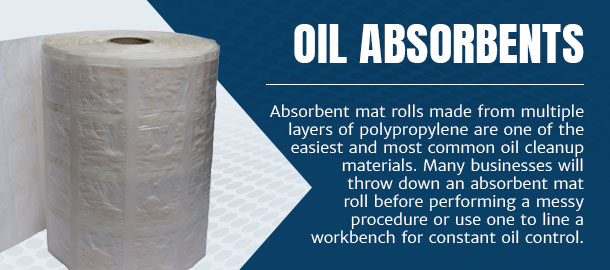
Spills involving oils can be among the most difficult to clean up, so it’s critical to have the materials to deal with them. Materials made of polypropylene tend to be the standard choice for oil cleanup, including:
It’s particularly important for automotive repair shops to keep oil absorbents on hand since oil on the floor is a fact of life in the mechanic business. Other businesses that likely need substantial oil cleanup capacity include restaurants, food processing facilities and machine shops.
Spill kits are designed to give you everything you need to efficiently respond to several different types of oil and chemical spills. These all-in-one kits come equipped with various types of absorbents, from heavy-duty absorbent pads to absorbent socks, as well as essential spill response PPE such as rubber gloves and goggles.
Each type of spill kit is designed to respond to a different type of spill, from water-based substances to hydrocarbons to strong acids and solvents. Although some of these kits can be used to clean up other types of spills, it’s always best to plan ahead and find the one that matches your needs perfectly. Specialty spill kits are also available for substances that require unique responses such as mercury, battery acid and bodily fluids.
Many workplaces see hundreds of thousands of steps per day in foot traffic, and that can include tracking in some pretty messy substances. A rainy day can mean a floor covered in mud, and workplaces that have dishwashers, large sinks or other sources of water often find that a wet floor is among their most persistent safety concerns.
Traffic rugs are one of the most widely-used ways to combat wet floors in the workplace. They work by absorbing the many liquids that are likely to get tracked in and thrown around throughout the workday. The traffic mat soaks these up while staying dry itself and providing a grip-enabled walking surface for employees. To get the most out of your traffic rugs, make sure you’re washing them frequently and drying them completely so as not to allow mold and other organisms to build up inside.
Skimmers and booms are typically used to control and remove oily substances from the surface of water. They’re most often seen when cleaning up oil spills on a body of water, and they’re an important tool for preventing environmental damage from these events. Skimmers and booms are most effective when used together.
A boom is typically a static device that’s placed in a containment pattern around the site of a spill to concentrate it into a smaller location and prevent it from migrating outward. Skimmers typically come in the form of an absorbent sock that’s dragged across the surface of the water to remove oil and/or debris, usually used once a boom has been deployed. These devices are highly effective for their designed purpose but aren’t widely used outside of cleaning up oil spills in bodies of water.
Although not an absorbent in a traditional sense, sumps and catch basins can be some of the most critical tools for spill and leak control. When dealing with a leaking drum or tote, there’s often no time to waste, so the right tools should be on hand long before you need them.
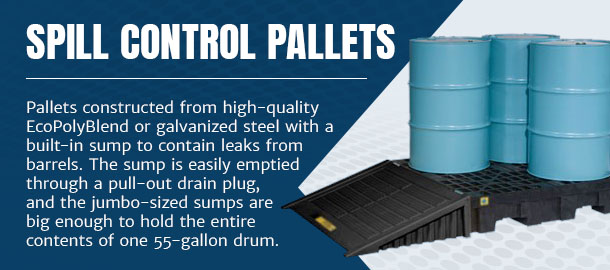
One of the easiest and most convenient ways to improve spill control capability in a warehouse facility is to use spill control pallets, trays and drums from Air Sea Containers, such as:
If you need to control spills, leaks, drainage, moisture or just about any other liquid ingress issue, Air Sea Containers has plenty of absorbent options to meet your needs. From buying vermiculite to ordering high-quality absorbent pads, you’ve got all the options that will keep your workplace and products safe, dry and functioning well. Questions about our selections? Reach out to us over the phone at (866) 596-9448 or contact us online to learn more about our absorbents and get a free quote on anything you need.
Air Sea Containers has a 25-year track record of success in providing the best solutions for both and workplace safety. That means we also have expert knowledge of which types of absorbents are most effective for which applications. This guide to eight types of commonly used absorbents will help you select the right ones when you’re shopping for absorbents—and Air Sea’s selection will help you get the best quality at a price you can afford.
Why Are Absorbents Useful?
Before we jump into the numerous kinds of absorbents available, let’s take a moment to consider why this category of products is necessary for many businesses. Having the right absorbent on hand can save the day in many different common situations, including:
- Spills: No matter how good your spill prevention procedures are, a spill will probably happen eventually. Quickly containing and cleaning up a spill is critical for employee and customer safety, and it’s even more important if your workplace works with hazardous materials.
- Leaks: Pipes, hoses and valves will all eventually break down or wear out. Regular maintenance helps a lot, but it can’t prevent all leaks, all the time—so most businesses will need a way to deal with leaks when they do occur.
- Packaging: Controlling moisture levels inside packaging is a critical need for many manufacturers and shippers. Many products can be damaged by elevated moisture, and some liquid products (such as hazardous goods) will need liquid absorption if they’re damaged while inside the package to prevent injuries or further property damage.
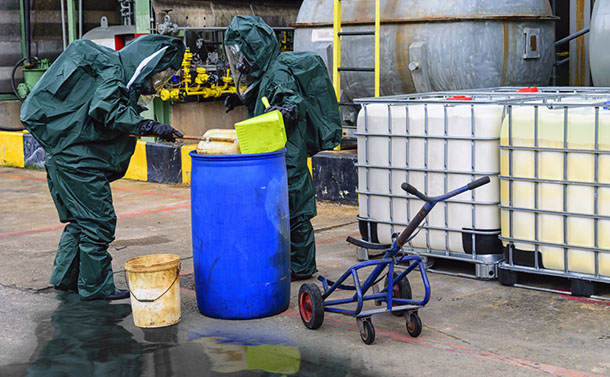
Because most businesses are likely to encounter one or more of these problems at some point, it’s important to have a plan in place for how to respond (as well as how to avoid spills in the first place). A complete spill response and prevention plan will include all or some of the following, depending on the nature of your business:
- An outline of potential spill hazards.
- Procedures for the use of absorbents in preventing and managing spills.
- Packaging and handling procedures designed to prevent spills.
- Locations of emergency PPE and procedures for using it.
- Detailed cleanup procedures for any hazardous materials present.
- Appropriate authorities to contact in the event of a spill.
- Procedures for disposing of damaged goods.
In order to fully develop your spill response and prevention plans, you should know about the different types of absorbents available and which applications each is used for. So, let’s take a look.
1. Vermiculite
Vermiculite is an inert mineral that’s mined for its many useful properties. Many people know it from its widespread use as a soil additive in gardening, but it’s also a common favorite for moisture absorbent in shipping packages.
Why is vermiculite such a popular option for shipping? The answer lies in its natural properties:
- Vermiculite absorbs moisture well, making it ideal for shipping items that need to be protected from moisture while in transit. It can also absorb spilled liquids, which can help control incidents where a liquid product is damaged while inside its packaging.
- Vermiculite is inert, meaning that it’s almost totally non-reactive with any substance. This makes it an excellent choice for hazmat shipping since it will not cause dangerous reactions with hazardous chemicals and is not combustible.
- Vermiculite is also great at absorbing impacts and protecting cargo in transit. Its slightly springy texture means that it can absorb a substantial amount of force, helping to keep cargo safely insulated from rough roads or careless handling.
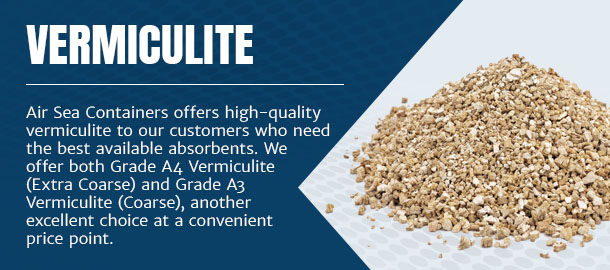
Air Sea Containers offers high-quality vermiculite to our customers who need the best available absorbents. We offer both Grade A4 Vermiculite (Extra Coarse), the highest-grade vermiculite available, and Grade A3 Vermiculite (Coarse), another excellent choice at a convenient price point. The coarse grain size of these products makes them non-dusty, so cleanup is minimized. Each comes in a four cubic-foot bag for value and convenience. All vermiculite available from Air Sea Containers is listed as asbestos-free and is safe for household and business use.
We also offer vermiculite as part of our complete 4GV packaging kits for no-hassle hazmat shipping. These kits offer everything you need for the safe transportation of hazardous materials like batteries, strong solvents and other materials regulated by federal hazmat shipping rules. Vermiculite shipper kits are particularly good for shipping lithium ion batteries, and we offer a full range of these kits specially designed for lithium battery shippers.
2. Absorbent Pads
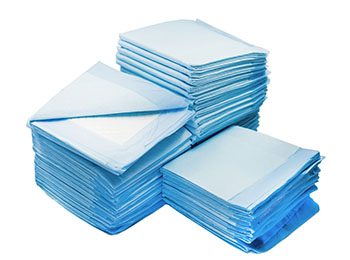
Laminated absorbent pads are a common packaging material used in dozens of different industries today. Air Sea Containers offers absorbent pads in many different sizes and shapes for a variety of applications, including:
- Absorbent food pads are a key element in the packaging of fresh meat and poultry. It can be difficult to prevent juices from fresh meats leaking between packages and puddling inside them, creating unappealing and potentially unsanitary conditions. Thus, most modern meat packaging needs disposable absorbent pads placed in the bottom to absorb these juices.
- Professionals in the medical field often use absorbent pads to deal with spilled bodily fluids and other potential biohazard spills. Medical absorbent pads need to completely hold spilled liquid without allowing drips to spread the spill further, so pads made from ultra-absorbent materials like SORB that remain dry to the touch are recommended. And even for workplaces outside the medical field, keeping these pads on hand can be helpful to deal with bodily fluid spills resulting from injuries.
- Absorbent pads are often a significant component of personal hygiene and wound dressing products. These products need to control not only fluid migration but should also contain the odor that can be associated with bodily fluids. Thus, it’s advisable to use absorbent pads with a polyester nonwoven cover and back sheets that help contain and control absorbed liquids.
Air Sea Containers offers all of these types of absorbent pads, manufactured to the highest quality using an industry standard design that features two-sided polyethylene film with one-sided perforations to retain more fluids and improve product freshness. Our pads are also made using virgin fibers to guarantee maximum absorbency.
Please note that we offer our absorbent pads as a special-order item to ensure the best performance possible for our customers. Feel free to reach out to us to get a quote for an order of these pads, including information on turnaround time.
3. Clay-Based Absorbents
If you’ve ever seen cat litter used to clean up a spill, you’ve seen how clay-based absorbents work. The liquid is soaked up by the tiny particles of absorbent clay, which are then scooped up and disposed of. Clay absorbents are among the most commonly-used types of absorbents due to their extremely low cost. However, it should be noted that they’re also among the lowest in absorption efficiency, often create large dust clouds when used and can be labor-intensive to dispose of. Thus, although their price point is low, they can be less efficient than many businesses realize.
4. Oil Absorbents
Spills involving oils can be among the most difficult to clean up, so it’s critical to have the materials to deal with them. Materials made of polypropylene tend to be the standard choice for oil cleanup, including:
- Absorbent mat rolls made from multiple layers of polypropylene (similar to super-absorbent paper towels) are one of the easiest and most common oil cleanup materials. Many businesses will throw down an absorbent mat roll before performing a messy procedure or use one to line a workbench for constant oil control.
- Absorbent socks are another classic way to clean up oils. These socks aren’t for your feet—they’re long polypropylene mesh tubes with a polypropylene filler that’s highly absorbent and resistant to harsh chemicals.
It’s particularly important for automotive repair shops to keep oil absorbents on hand since oil on the floor is a fact of life in the mechanic business. Other businesses that likely need substantial oil cleanup capacity include restaurants, food processing facilities and machine shops.
5. Spill Kits
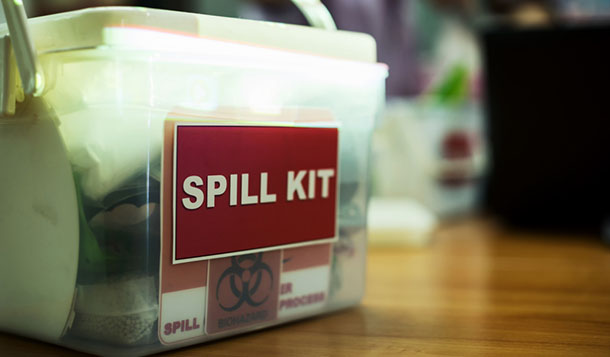
Spill kits are designed to give you everything you need to efficiently respond to several different types of oil and chemical spills. These all-in-one kits come equipped with various types of absorbents, from heavy-duty absorbent pads to absorbent socks, as well as essential spill response PPE such as rubber gloves and goggles.
Each type of spill kit is designed to respond to a different type of spill, from water-based substances to hydrocarbons to strong acids and solvents. Although some of these kits can be used to clean up other types of spills, it’s always best to plan ahead and find the one that matches your needs perfectly. Specialty spill kits are also available for substances that require unique responses such as mercury, battery acid and bodily fluids.
6. Traffic Rugs
Many workplaces see hundreds of thousands of steps per day in foot traffic, and that can include tracking in some pretty messy substances. A rainy day can mean a floor covered in mud, and workplaces that have dishwashers, large sinks or other sources of water often find that a wet floor is among their most persistent safety concerns.
Traffic rugs are one of the most widely-used ways to combat wet floors in the workplace. They work by absorbing the many liquids that are likely to get tracked in and thrown around throughout the workday. The traffic mat soaks these up while staying dry itself and providing a grip-enabled walking surface for employees. To get the most out of your traffic rugs, make sure you’re washing them frequently and drying them completely so as not to allow mold and other organisms to build up inside.
7. Skimmers and Booms
Skimmers and booms are typically used to control and remove oily substances from the surface of water. They’re most often seen when cleaning up oil spills on a body of water, and they’re an important tool for preventing environmental damage from these events. Skimmers and booms are most effective when used together.
A boom is typically a static device that’s placed in a containment pattern around the site of a spill to concentrate it into a smaller location and prevent it from migrating outward. Skimmers typically come in the form of an absorbent sock that’s dragged across the surface of the water to remove oil and/or debris, usually used once a boom has been deployed. These devices are highly effective for their designed purpose but aren’t widely used outside of cleaning up oil spills in bodies of water.
8. Spill Control Pallets and Trays
Although not an absorbent in a traditional sense, sumps and catch basins can be some of the most critical tools for spill and leak control. When dealing with a leaking drum or tote, there’s often no time to waste, so the right tools should be on hand long before you need them.
One of the easiest and most convenient ways to improve spill control capability in a warehouse facility is to use spill control pallets, trays and drums from Air Sea Containers, such as:
- Spill Control Pallets are pallets constructed from high-quality EcoPolyBlend or galvanized steel with a built-in sump to contain leaks from barrels. The sump is easily emptied through a pull-out drain plug, and the jumbo-sized sumps are big enough to hold the entire contents of one 55-gallon drum.
- Spill Control Trays are EcoPolyBlend plastic trays that offer a great value for on-the-spot spill assistance. Perfect for catching drips from filling and emptying procedures or for containing leaks from batteries or equipment, they’re suitable for use in both indoor and outdoor environments.
- Salvage Drums are oversized metal drums designed to fit over a leaking drum and collect leaking fluids in a safe place.
If you need to control spills, leaks, drainage, moisture or just about any other liquid ingress issue, Air Sea Containers has plenty of absorbent options to meet your needs. From buying vermiculite to ordering high-quality absorbent pads, you’ve got all the options that will keep your workplace and products safe, dry and functioning well. Questions about our selections? Reach out to us over the phone at (866) 596-9448 or contact us online to learn more about our absorbents and get a free quote on anything you need.


