
How to Make Safety in the Warehouse a Priority
- By Cory Levins
- 2 dic 2016

A topic that has received a greater amount of attention and focus in the past decade of warehouse operations is worker safety. It might seem like this issue has been resolved a long time ago until you take a look at the numbers.
With nearly 150,000 workers across several thousand warehouses in the United States, the rate for fatal injuries remains the highest out of any other industry. This can be explained by the continuous handling of heavy and dangerous products combined with long, laborious work hours at the warehouse.
There is no getting around the fact that warehouse work is hard work, but there need to be safety initiatives in place that prevent worker burnout and injury. It ends up being a very costly process to constantly replace workers who are suffering from preventable injuries.
Being educated on the proper safety practices starts with knowledge. New workers need to be familiarized with the safety practices employed by their warehouse, and veteran workers need to refresh their knowledge on an annual basis. A safety committee should be installed to ensure that educational efforts are not cast aside as an administrative necessity.
Safety organizations like OSHA take safety education very seriously and can place hefty fines on companies that cannot demonstrate that the proper safety training is being provided to all workers.

There are often cases where a worker might not know that something is unsafe to touch because of a lack of clear labeling. Having labels and placards set up is key to keeping workers safe at all times.
If workers can anticipate possible dangers in advance of handling certain materials, they can take the appropriate action. They can have another experienced worker assist them in handling something. They can take a few minutes to get any additional equipment needed to safely handle the material. In some cases, they may even choose not to do something due to the fact that their safety might be put in jeopardy.
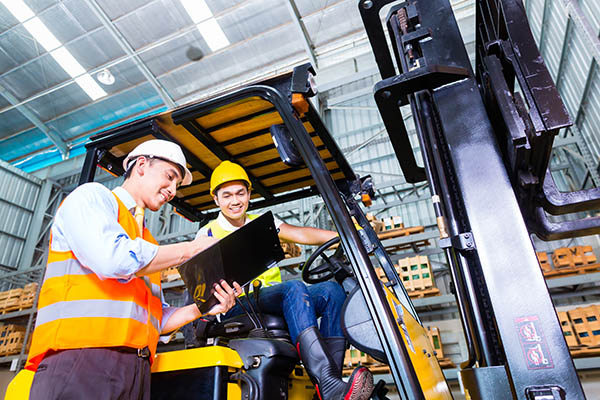
Workers are usually provided with their own PPE so that they can safely perform work at all times. However, there may be cases where a worker has accidentally missed their PPE and requires a spare set in order to get their job done. Rather than have them sit out and call it quits, they can take a spare set of PPE and get back to work. This requires having multiple sets of PPE laid out in advance and a systematic protocol for taking care of borrowed PPE.
There may be some things in the warehouse that need to be physically carried from one place to another. Lifting, pulling, pushing, and reaching are just some of the many actions that need to be performed by workers. It is no surprise that ergonomic-related injuries are common in the warehouse industry.
To combat this, safety training and reinforcement need to include the proper methods for lifting and transferring heavy equipment from one place to another. Workers should note what their co-workers are doing and help anyone who might be putting themselves in harm’s way.
There is nothing worse than being late in dealing with spilling a material that might prove hazardous to all nearby employees if it is accidentally touched or inhaled. Therefore, every warehouse needs to purchase spill prevention and clean-up products from a reliable supplier that specializes in building packaging for dangerous goods.
Safety should be one of, if not the top priority for any warehouse. It is the key to keeping workers around for a long period of time and avoiding unnecessary restrictions from safety organizations that might deem a company’s working environment to be unsafe.
With nearly 150,000 workers across several thousand warehouses in the United States, the rate for fatal injuries remains the highest out of any other industry. This can be explained by the continuous handling of heavy and dangerous products combined with long, laborious work hours at the warehouse.
There is no getting around the fact that warehouse work is hard work, but there need to be safety initiatives in place that prevent worker burnout and injury. It ends up being a very costly process to constantly replace workers who are suffering from preventable injuries.
Have the Proper Safety Training in Place
Being educated on the proper safety practices starts with knowledge. New workers need to be familiarized with the safety practices employed by their warehouse, and veteran workers need to refresh their knowledge on an annual basis. A safety committee should be installed to ensure that educational efforts are not cast aside as an administrative necessity.
Safety organizations like OSHA take safety education very seriously and can place hefty fines on companies that cannot demonstrate that the proper safety training is being provided to all workers.
Use the Proper Safety Labels

There are often cases where a worker might not know that something is unsafe to touch because of a lack of clear labeling. Having labels and placards set up is key to keeping workers safe at all times.
If workers can anticipate possible dangers in advance of handling certain materials, they can take the appropriate action. They can have another experienced worker assist them in handling something. They can take a few minutes to get any additional equipment needed to safely handle the material. In some cases, they may even choose not to do something due to the fact that their safety might be put in jeopardy.
Have Spare Personal Protective Equipment (PPE) Ready
Workers are usually provided with their own PPE so that they can safely perform work at all times. However, there may be cases where a worker has accidentally missed their PPE and requires a spare set in order to get their job done. Rather than have them sit out and call it quits, they can take a spare set of PPE and get back to work. This requires having multiple sets of PPE laid out in advance and a systematic protocol for taking care of borrowed PPE.
Encourage Ergonomic Lifting Practices
There may be some things in the warehouse that need to be physically carried from one place to another. Lifting, pulling, pushing, and reaching are just some of the many actions that need to be performed by workers. It is no surprise that ergonomic-related injuries are common in the warehouse industry.
To combat this, safety training and reinforcement need to include the proper methods for lifting and transferring heavy equipment from one place to another. Workers should note what their co-workers are doing and help anyone who might be putting themselves in harm’s way.

Deal with All Waste Accidents & Spills Immediately
There is nothing worse than being late in dealing with spilling a material that might prove hazardous to all nearby employees if it is accidentally touched or inhaled. Therefore, every warehouse needs to purchase spill prevention and clean-up products from a reliable supplier that specializes in building packaging for dangerous goods.
Safety should be one of, if not the top priority for any warehouse. It is the key to keeping workers around for a long period of time and avoiding unnecessary restrictions from safety organizations that might deem a company’s working environment to be unsafe.


