
Corrugated Boxes: 5 Essential Packing Tips for Shipping Your Fragile Items Safely
- By Cory Levins
- 2 dic 2019
When your business is shipping fragile items, you need to do more than hope your goods get to their destination safely. You need to create a plan that addresses the dangers your goods might face in transit through smart planning and packaging.
Corrugated shipping boxes are among the most cost-effective and popular ways to ship goods, both hazardous and non-hazardous, but they have to be used correctly to ensure that they’re effective. These five packing tips from Air Sea Containers will help you keep your fragile goods safe in transit when shipping them using a corrugated box. From selecting the right box to using the right additional packaging materials, our experts will show you how to get started on the right path.
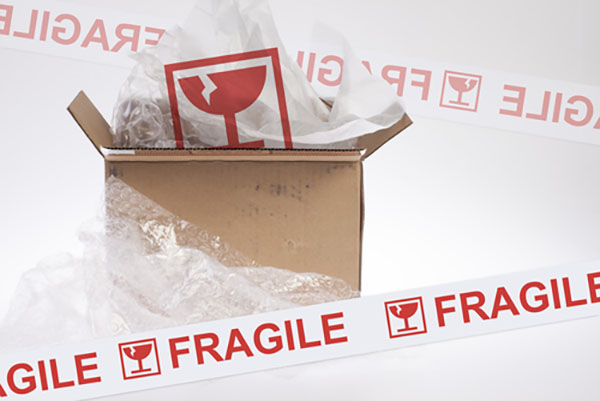
1. Use the box that’s best suited for your cargo.
The first thing to do is ensure that you’re using the right size and design of corrugated box. You don’t want a box that’s too big, as this will allow cargo to be jostled around and potentially damaged. It’s also important to check that your box is using a grade of corrugated board that’s strong enough to hold your cargo without being unnecessarily thick (which can increase your fuel costs in the long run). Use our guide to corrugated board strength testing to determine what you need.
Air Sea offers the easy way to get the right box for you with our custom corrugated shipping boxes. Choose your dimensions, your board strength and your design options with our easy-to-use interface. We offer both hazmat and non-hazmat boxes with custom printing and all of the features you expect from a modern corrugated shipping box.
2. Apply the right labels and stickers to the box.
Instructional shipping labels and placards are important for informing package handlers on how to handle your cargo. A “Fragile” label reminds the handler to use extra caution, a “Keep Cold” label reminds them that a package needs to be refrigerated (and often specifies a temperature) and a “This End Up” label prevents your cargo from being stored incorrectly.
On top of that, hazmat shippers will need to remember their hazmat labels. These colored labels help handlers identify the hazard categories of any hazardous materials contained within and are an essential safety tool for making sure that hazmat goods are handled correctly.
Air Sea offers all the shipping labels and placards your business needs with a full range of messages. We print our labels on durable materials designed for rugged performance, our bright and clear printing resists fading and we offer hazmat labels and placards for all hazard categories.
3. Use void fill packaging materials to keep the cargo safe inside the box.
Even when you’re using the right size box, there may still be some extra space left in the package that can give the cargo room to move around—which you definitely don’t want. To keep cargo immobilized and safe from shocks, you need void fill materials to protect it.
Air Sea offers some of the most popular void fill materials in new and improved eco-friendly packaging versions. We’ve got biodegradable packing peanuts that actually outperform traditional Styrofoam peanuts, as well as Opus Air Pillows that set a new standard for biodegradable void fill performance—the perfect balance between sustainability and utility.
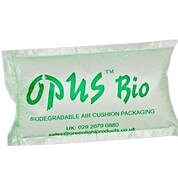
Opus Air Pillows
4. Protect your boxes from moisture damage.
Moisture can do just as much damage to the contents of your box as mishandling in some cases. It can damage the structural integrity of cardboard, as well as harming the cargo itself. Thus, taking steps to make your cargo more moisture-resistant is important, whether or not the cargo itself is moisture-sensitive.
Packaging tape is one popular method for sealing out moisture, though you’ll need to make sure that each opening point of the box is adequately covered. For heavy-duty moisture protection, vermiculite is a popular option, a spongy mineral that’s great for both absorbing moisture and protecting your cargo from impacts.
5. Use dunnage bags to protect the boxes while in transit.
Even the most careful vehicle operators will hit a few bumps, so it’s important that your cargo be ready for those when they happen. Dunnage air bags are the perfect solution for keeping your boxes themselves from shifting and bumping up against other cargo while in transit. Air Sea’s dunnage air bags are reusable and recyclable, and they offer great performance for shippers in all kinds of different industries.

Air Sea Containers is ready to answer any questions you might have about getting the most performance out of our corrugated shipping boxes. Call us at (866) 596-9448 or contact us online to get the information you need from our shipping and packaging experts.


