
What Are Considered Category A Infectious Substances?
- By Cory Levins
- 29 may 2020

As the COVID-19 outbreak has reminded us, the health of the entire world depends on control of infectious diseases and proper safety precautions. Thus, when shipping substances such as medical specimens that may contain infectious substances, it’s critical to observe infectious substances regulations to the letter.
Category A infectious substances contain the pathogens that pose the biggest risk to human health and safety. In this article, we’ll discuss what these pathogens are, how the UN defines them, and what logistics professionals are expected to do to keep these infectious agents under control.

What is a Category A Infectious Substance?
Here’s how UN hazmat regulations define a Category A infectious substance: “An infectious substance transported in a form that, when exposure to it occurs, is capable of causing permanent disability, life threatening or fatal disease in otherwise healthy humans or animals.” These infectious agents cause diseases that are both transmissible and serious, meaning that they need to be handled with the utmost caution. In a minute, we’ll look at the packaging techniques required for Category A infectious substances. First, however, let’s look at the different types of specimens that can be included in Category A and review some common examples of Category A infectious substances. Shop Trusted Category A PackagingWhich Types of Materials Can Be in Category A?
The three types of materials that can contain Category A infectious substances are:- Cultures: Viruses intentionally propagated in a lab using a growth medium.
- Patient Specimens: Tissue, blood, excreta, body parts, and other types of specimens collected from the body of a human or animal.
- Medical Waste: Waste material produced by medical facilities such as used syringes, gloves, gowns, etc.
Category A Infectious Substance Examples
Now, let’s look at some of the most commonly encountered or well known Category A infectious substances. A few diseases are classified in Category A whether present in cultures, tissues, or wastes. These are some of the most dangerous and contagious viruses on Earth, including:- Hemorrhagic fever viruses, such as Ebola virus, Marburg virus, and Omsk hemorrhagic fever
- Monkeypox virus
- Hantaviruses
- Variola virus (smallpox)
- SARS-CoV-2 (coronavirus or COVID-19)
- Rabies virus
- HIV
- Brucella bacteria
- West Nile virus
- Tick-borne encephalitis viruses
- Foot and mouth disease virus
- Hepatitis B virus
- Herpes Simplex B virus
- Clostridium botulinum bacteria (botulism)
- Polio virus
- Yersinia pestis (plague bacteria)
Category A Infectious Substance Packaging
Category A infectious substances must be shipped in a specific type of packaging that’s designed to contain the infectious agents and prevent them from spreading. Category A packaging uses a three-layer system with multiple built-in failsafes to maximize safety without compromising performance. Find the Right Hazmat Box to Fit Your Needs The basic design of the three-layer packaging system is:- A primary receptacle that holds the actual sample in a watertight and leak-proof container, with absorbent material to protect against spills.
- A secondary receptacle that holds one or more primary receptacles in another watertight and leak-proof container surrounded by absorbent material.
- An outer shipping package that protects the secondary receptacle and protects it from breakage and water. The outer package should contain a UN hazard class 6 warning label, a label describing the specimen within, and a label listing contact information for both the shipper and the receiver.
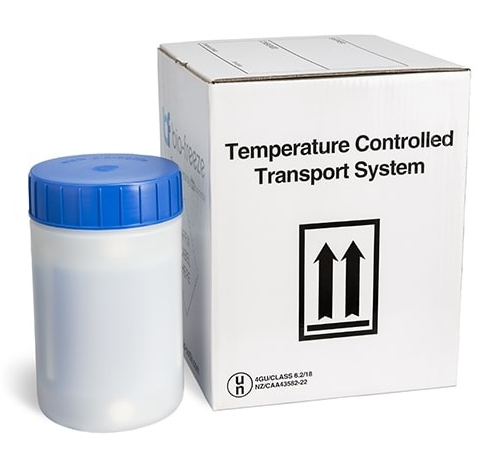
1L Bio-Freeze Pack
Air Sea Containers is a leader in hazmat packaging, and we’ve spent 25 years learning the ins and outs of safely packaging dangerous goods. To learn more about our Category A packaging and its many features to protect health and safety, call us at (866) 596-9448 or contact us online.


