
Intent for Labels and Placards on a Storage Container
- By Cory Levins
- 9 mar 2017
When shipping hazardous materials, it’s important to meet the government regulations. For example, you are required to use appropriate labels and placards on the shipping container. You may also see these visuals on storage containers in a warehouse or factory. But why are they used and what do they mean?
Hazmat labels are required by the Department of Transportation and International Air Transport Association in order to ship hazardous materials within the United States or to a foreign country. You may have seen these labels, which are easily identified by their diamond shape and various graphics and text.
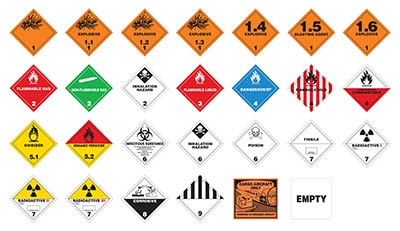
These labels don’t offer a lot, in terms of text, but their background colors and graphics tell a lot to workers and other people who may handle the materials during storage or transport.
According to the Hazard Communication Standard adopted by the Occupational Safety and Health Administration (OSHA), a label on a hazardous material must contain the following information:
The nine hazard classes are as follows:
Hazards are classified according to the severity of the danger. The lower the number, the more severe the danger. For example, materials in Class 1 are the deadliest, while those in Class 9 cause the least amount of danger.
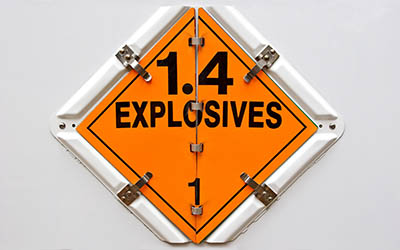
Hazardous materials can be assigned to only one hazard class, even if they meet the criteria for multiple classes. For example, gas is flammable but also poisonous if swallowed. However, based on the Precedence of Hazard Table, gas would be categorized under the flammable liquids class because of its primary hazard (flammability).
When hazardous materials are kept in storage near employees, employers have the responsibility of ensuring that the appropriate label is placed on each container, whether it is a tote, drum, tank, or another storage container. The label must be legible at all times and should be placed in an area where it will not be washed off or faded off in any way.
The label must also be in English, although other languages can be added as needed. In addition, the label must be revised if chemical importers and manufacturers become aware of new information regarding the hazards of the dangerous materials.
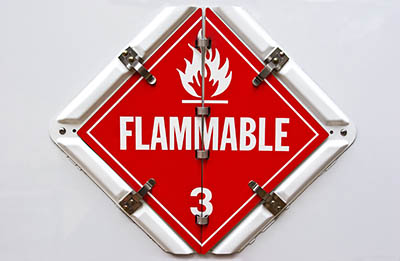
The presence of labels and placards on hazardous materials is important to those who not only handle the materials but also to first responders in the event of an emergency. Now that you know when to use labels and placards, make sure you label hazardous materials correctly. Not only is it the law, but it could also save someone’s life.
Hazmat labels are required by the Department of Transportation and International Air Transport Association in order to ship hazardous materials within the United States or to a foreign country. You may have seen these labels, which are easily identified by their diamond shape and various graphics and text.
These labels don’t offer a lot, in terms of text, but their background colors and graphics tell a lot to workers and other people who may handle the materials during storage or transport.
According to the Hazard Communication Standard adopted by the Occupational Safety and Health Administration (OSHA), a label on a hazardous material must contain the following information:
- Contact information of the responsible party. This includes the name, address, and phone number of the chemical manufacturer or importer.
- Product identifier. This is how the hazardous material is identified. This can include a chemical name, batch number, or code number.
- Signal word. This is used to indicate the severity of the hazard. Only one of two words can be used: “Danger” or “Warning.” “Warning” is used for less severe hazards, while “Danger” is used for more severe ones.
- Hazard statement. The nature and degree of hazard must be listed. The label must include all appropriate hazard statements. An example would be “Exposure to the eyes can cause blindness.”
- Precautionary statement. This describes what should be done in order to minimize exposure. There are four types of statements: prevention, response, storage, and disposal.
- There are nine pictograms used to show the type of hazard the material can cause. These diamond-shaped signs come in various colors. For example, Class 1 is orange, Class 2 is green, Class 3 is red, Class 4 is white on top and red on the bottom, Class 5 is yellow, and Classes 6, 7, and 8 are black and white.
Hazard Classes
The nine hazard classes are as follows:
- Explosives (ammunition, fireworks, and rockets)
- Compressed gases (aerosols, lighters, carbon dioxide, and fire extinguishers)
- Flammable liquids (acetone, gas, and paints)
- Flammable solids (matches, metal powders, and carbon)
- Oxidizers (chlorates, nitrates, and hydrogen peroxide)
- Poisonous materials (medical waste, dyes, and acids)
- Radioactive materials (isotopes, uranium, and radioactive ores)
- Corrosive materials (batteries, acids, and formaldehyde)
- Miscellaneous hazardous materials (dry ice, chemical kits, and vehicles)
Hazards are classified according to the severity of the danger. The lower the number, the more severe the danger. For example, materials in Class 1 are the deadliest, while those in Class 9 cause the least amount of danger.
Hazardous materials can be assigned to only one hazard class, even if they meet the criteria for multiple classes. For example, gas is flammable but also poisonous if swallowed. However, based on the Precedence of Hazard Table, gas would be categorized under the flammable liquids class because of its primary hazard (flammability).
Employer Responsibilities
When hazardous materials are kept in storage near employees, employers have the responsibility of ensuring that the appropriate label is placed on each container, whether it is a tote, drum, tank, or another storage container. The label must be legible at all times and should be placed in an area where it will not be washed off or faded off in any way.
The label must also be in English, although other languages can be added as needed. In addition, the label must be revised if chemical importers and manufacturers become aware of new information regarding the hazards of the dangerous materials.
The presence of labels and placards on hazardous materials is important to those who not only handle the materials but also to first responders in the event of an emergency. Now that you know when to use labels and placards, make sure you label hazardous materials correctly. Not only is it the law, but it could also save someone’s life.


