
The Benefits of Shipping with an Ultra Freeze Pack
- By Cory Levins
- 17 ene 2018

Lives depend on the secure and safe transport of pharmaceuticals, vaccines, organs, blood, plasma, and tissue. These life-saving items are sensitive to temperatures and need to be shipped in a temperature-controlled environment always. This setting is often referred to as the “cold chain.”
Two of the most significant risks when dealing with temperature-sensitive products is contamination resulting from damage or temperature deviations. These risks can be alleviated with the right packaging.
Our ultra-freeze pack contains not only the right packaging and labels to ship substances that require temperature stabilization at or below freezing, but also use our patent-pending phase-change technology that negates the need for dry ice.
Traditionally the way most companies transported materials requiring freezing temperatures has been with dry ice. However, dry ice is considered a hazardous material. It releases large amounts of carbon dioxide that can explode if the packaging is not properly vented.
Dry ice can cause frostbite if it comes into contact with skin, and if large amounts of thawing dry ice release the carbon dioxide in a confined space, it becomes a suffocation hazard.
Shipping with dry ice requires special packaging. You cannot use certain plastics that become brittle in cold temperatures. Containers that have dry ice inside must have a threaded lid or non-sealing top.
The U.S. Postal Service will not transport dry ice.
Finally, shippers that use dry ice must complete a hazardous materials shipper’s training course every two years.
The cold chain is a temperature controlled supply chain that is designed to maintain ideal conditions during the handling, packaging, labeling, shipping, and storage of perishable items. The aim is to guarantee these products arrive at their destination in a usable state. This means the cold chain system must keep the temperature range specified for the medicine or biospecimen it is shipping.
Regulations and transit risks generate an environment that needs to be strictly managed. The proper packaging plays a valuable role in avoiding an expensive and disastrous loss of product because of temperature changes or damage to the packaging.
For example, the temperatures on a tarmac at the airport can be high during loading and plummet to below zero degrees at cruising altitude. Combine that with poor weather, delays at customs, and natural disasters, and in addition to the temperature fluctuations, the transit time can unexpectedly increase too.
Temperature-controlled packaging is a significant part of the cold chain process. It must meet precise standards to maintain the products within a specific temperature range for a specified time. For instance, many pharmaceuticals must maintain a temperature between 36°F and 46°F while others may need to stay frozen entirely.
For products that must remain frozen, one way to attain temperature assurance in the shipping of pharmaceuticals is to use an ultra-freeze pack. This is a cost-effective and practical method of transporting biological specimens at lower temperatures.
Many times, shippers must transport blood, urine, fluids, and other specimens containing or suspected of containing infectious substances. International regulations require you use the UN2814 and UN3373 label. These are infectious substances or potentially infectious substances carried in a form that, if exposures occur, can cause life-threatening or a fatal disease, or permanent disability. Cultures of this type that carriers often transport include Hepatitis, HIV cultures, the rabies virus, and yellow fever.
These substances require cold-chain transport for safety and packaging that includes the appropriate UN labels, included in our ultra-freeze packs.
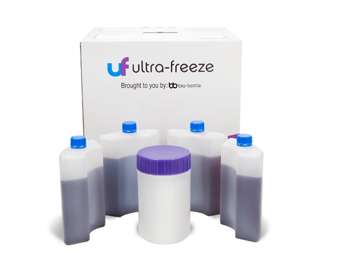
Shipping with an ultra-freeze pack keeps your products within a consistent, measurable temperature range. A typical ultra-freeze pack container includes:
The ultra-freeze pack will maintain the temperature of the product between -112°F to -4° F for a period exceeding 72 hours.
It has the four-digit UN (United Nations) numbers indicating that it has been tested and meets all UN international standards for transporting goods by land, sea or air, including infectious and non-hazardous biological materials up to three liters in weight.

The high-density polyurethane cooler is molded into the interior of the box for insulation. It also provides sturdy protection from harsh distribution environments and is reusable.
Since no dry ice is required with our ultra-freeze packs, it can be transported as non-hazardous cargo.
If you need to keep a substance frozen for longer transit periods, the ultra-freeze plus transport kit will keep the package temperature at or below freezing for a minimum of seven days. The plus pack has all the other packaging and labeling materials contained in the ultra-freeze pack.
Two of the most significant risks when dealing with temperature-sensitive products is contamination resulting from damage or temperature deviations. These risks can be alleviated with the right packaging.
Our ultra-freeze pack contains not only the right packaging and labels to ship substances that require temperature stabilization at or below freezing, but also use our patent-pending phase-change technology that negates the need for dry ice.
Dry Ice
Traditionally the way most companies transported materials requiring freezing temperatures has been with dry ice. However, dry ice is considered a hazardous material. It releases large amounts of carbon dioxide that can explode if the packaging is not properly vented.
Dry ice can cause frostbite if it comes into contact with skin, and if large amounts of thawing dry ice release the carbon dioxide in a confined space, it becomes a suffocation hazard.
Shipping with dry ice requires special packaging. You cannot use certain plastics that become brittle in cold temperatures. Containers that have dry ice inside must have a threaded lid or non-sealing top.
The U.S. Postal Service will not transport dry ice.
Finally, shippers that use dry ice must complete a hazardous materials shipper’s training course every two years.
The Cold Chain
The cold chain is a temperature controlled supply chain that is designed to maintain ideal conditions during the handling, packaging, labeling, shipping, and storage of perishable items. The aim is to guarantee these products arrive at their destination in a usable state. This means the cold chain system must keep the temperature range specified for the medicine or biospecimen it is shipping.
Regulations and transit risks generate an environment that needs to be strictly managed. The proper packaging plays a valuable role in avoiding an expensive and disastrous loss of product because of temperature changes or damage to the packaging.
For example, the temperatures on a tarmac at the airport can be high during loading and plummet to below zero degrees at cruising altitude. Combine that with poor weather, delays at customs, and natural disasters, and in addition to the temperature fluctuations, the transit time can unexpectedly increase too.
Temperature-controlled packaging is a significant part of the cold chain process. It must meet precise standards to maintain the products within a specific temperature range for a specified time. For instance, many pharmaceuticals must maintain a temperature between 36°F and 46°F while others may need to stay frozen entirely.
For products that must remain frozen, one way to attain temperature assurance in the shipping of pharmaceuticals is to use an ultra-freeze pack. This is a cost-effective and practical method of transporting biological specimens at lower temperatures.
Labeling
Many times, shippers must transport blood, urine, fluids, and other specimens containing or suspected of containing infectious substances. International regulations require you use the UN2814 and UN3373 label. These are infectious substances or potentially infectious substances carried in a form that, if exposures occur, can cause life-threatening or a fatal disease, or permanent disability. Cultures of this type that carriers often transport include Hepatitis, HIV cultures, the rabies virus, and yellow fever.
These substances require cold-chain transport for safety and packaging that includes the appropriate UN labels, included in our ultra-freeze packs.
The Ultra-Freeze Pack
Shipping with an ultra-freeze pack keeps your products within a consistent, measurable temperature range. A typical ultra-freeze pack container includes:
- An outer-corrugated carton
- High-density polyurethane cooler
- Bio-bottle
- Phase change blocks
- Absorbent pad
- Bubble bag
- Labels (UN2814 & UN3373)
The ultra-freeze pack will maintain the temperature of the product between -112°F to -4° F for a period exceeding 72 hours.
It has the four-digit UN (United Nations) numbers indicating that it has been tested and meets all UN international standards for transporting goods by land, sea or air, including infectious and non-hazardous biological materials up to three liters in weight.
Insulating Material
The high-density polyurethane cooler is molded into the interior of the box for insulation. It also provides sturdy protection from harsh distribution environments and is reusable.
Since no dry ice is required with our ultra-freeze packs, it can be transported as non-hazardous cargo.
Ultra-Freeze Plus Pack
If you need to keep a substance frozen for longer transit periods, the ultra-freeze plus transport kit will keep the package temperature at or below freezing for a minimum of seven days. The plus pack has all the other packaging and labeling materials contained in the ultra-freeze pack.


