
A Complete Guide to Safe Shipping with Corrugated Shipping Boxes
- By Cory Levins
- 2 abr 2019

What’s inside your average corrugated box? It might be an innovative device, a tasty treat or a vital part delivered in the nick of time. But another thing that’s inside almost every box? Decades of engineering expertise, durable construction and tremendous value for the business using it.
Shipping goods safely while staying cost-conscious is one of our specialties at Air Sea Containers, and corrugated shipping boxes are hard to beat in those categories. What are the features of these boxes that make them so useful for so many businesses? What common techniques are used to keep corrugated boxes safe in transit? And what options does Air Sea have available for creating high-performance corrugated packaging solutions?
You’ve got the questions, and we’ve got the answers. It’s time to learn more about the ins and outs of corrugated shipping boxes.
What Is a Corrugated Shipping Box?
You might have noticed that we haven’t used the word “cardboard” yet. That’s because what many people refer to as a cardboard box is probably actually a corrugated fiberboard shipping box. What’s the difference? Let’s take a look:
- Cardboard is a type of heavy paper stock with a single layer. It’s good for many things—a case of soda, for example, is usually made out of cardboard—but it’s not typically used for shipping boxes.
- Corrugated fiberboard is cardboard’s sturdier cousin. This tougher grade of board is made by taking a piece of fiberboard with numerous tiny folds in it, called the medium, sandwiching it between two flat sheets of fiberboard and pressing all three layers together. This multi-layer construction makes corrugated board far more durable than cardboard and suitable for shipping all kinds of heavy goods.
Now that we have a working definition of the material we’re talking about, let’s take a look at the qualities that make it so popular.
Why Use Corrugated Shipping Boxes?
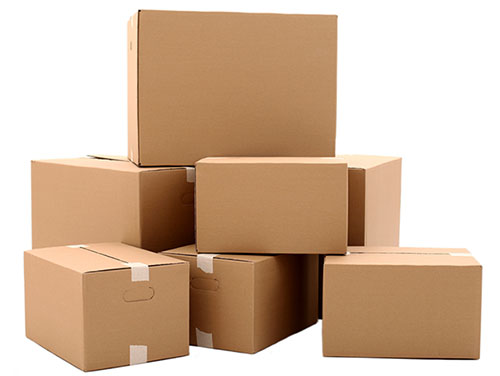
It’s no coincidence that the corrugated box industry is worth $320 billion. The numerous advantages of corrugated fiberboard boxes have made them a worldwide staple of the warehousing and transportation industries. Those advantages include:
- Highly cost-effective while still offering protection for your goods
- Durable enough to withstand typical rough handling in transit
- Protect goods inside from moisture by resisting and absorbing it
- Numerous different grades and constructions available, including double-walled versions
- Recyclable and more environmentally friendly than other materials like plastic
- Easy to seal securely using packaging tape or adhesives
- Can be custom fabricated and printed at a reasonable cost
Thanks to these benefits, you’ll find just about everything you can imagine shipped in corrugated boxes—from food to medical devices, to toys. But what about the most demanding shipping applications, such as hazardous materials transport? You might be surprised at just how well-corrugated boxes perform under these highly demanding conditions.
Can You Ship Dangerous Goods in Corrugated Boxes?
If you’re still thinking of corrugated boxes in terms of flimsy cardboard, you might think they’re not suitable for the rigors of hazmat shipping. However, the truth is that corrugated fiberboard is a tough and sturdy material that’s well-suited to serve as outer packaging for hazmat shipping containers.
When you’re shopping for corrugated boxes for hazmat shipping, you should look for a UN 4G or UN 4GV rating. These ratings certify compliance with all of the major hazmat shipping codes, including the U.S. Code of Federal Regulations and the IATA’s Dangerous Goods Regulations. We’ve got more detail on 4G ratings on our blog. Air Sea designs and tests our corrugated hazmat shipping boxes against these rigorous standards.
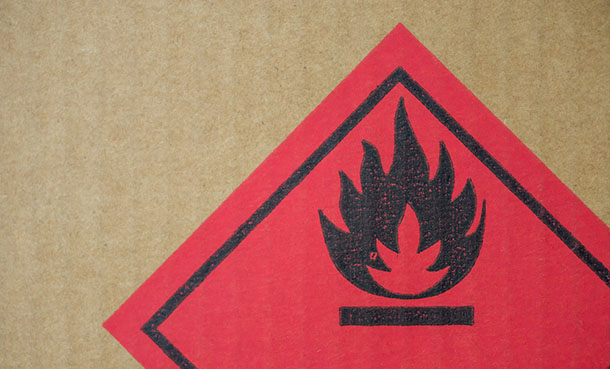
Keep in mind that a 4G or 4GV rating certifies that all of the elements of a hazardous item’s packaging, when used together, form a UN-compliant packaging method. A corrugated box by itself will usually not be sufficient—you’ll need approved second or third layers for your package to meet UN standards.
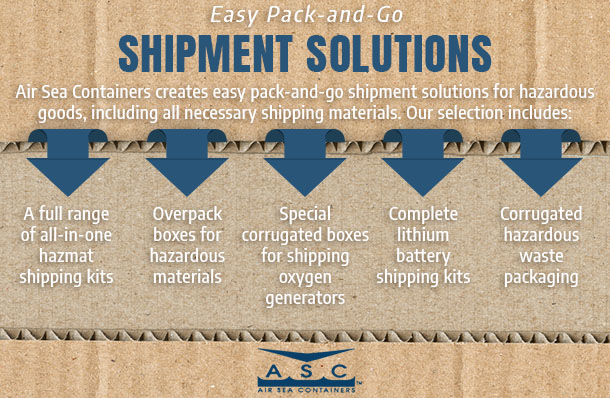
Fortunately, Air Sea Containers does the work for you by creating easy pack-and-go shipment solutions for hazardous goods, including all necessary shipping materials. Our selection includes:
- A full range of all-in-one hazmat shipping kits, including metal paint cans, aerosol cans, and more
- Overpack boxes that provide an extra layer of protection for hazardous materials shipped in jerricans or pails, including multi-unit boxes
- Special corrugated boxes designed specifically for shipping oxygen generators in compliance with the flame and penetration standards in 49 CFR 173.168
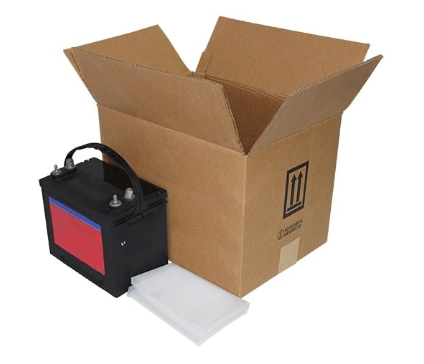
- Complete lithium battery shipping kits, including a heavy-duty corrugated outer box
- Corrugated hazardous waste packaging to facilitate the safe storage and shipping of batteries and other hazardous waste
It’s also critically important to ensure that hazardous materials are labeled in accordance with UN hazmat labeling rules. Following these labeling conventions will ensure that personnel throughout your supply chain know how to handle your packages safely. Air Sea offers a full range of hazmat labels with an easy peel-and-stick application and fade-resistant ink.
Choosing the correct UN-compliant hazmat box will ensure that you’re in compliance with relevant shipping laws. Whether you’re shipping hazmat or non-hazmat, you’ll still need to decide what load rating your boxes will need in order to safely transport your cargo. To do that, you’ll use the two tools we’ll talk about next.
Box Testing Methods: Mullen Test or ECT?
Most corrugated boxes are rated using one of two systems: Mullen testing (also called burst testing) or edge crush testing (ECT.) These are testing methods that measure the box’s durability, and both can give you a picture of how the box performs under certain conditions. What are the differences between the two and which one is right for your applications?
We’ve got a detailed summary of Mullen and ECT testing on our blog post—but here are the basics:
- The Mullen test or burst test is the original strength measurement for corrugated boxes. In this test, a piece of corrugated board is placed in a hydraulic vise under increasing pressure. The number of pounds at which it bursts is listed as its burst test rating; thus, a box with a 200# rating should burst at 200 pounds of pressure.
- ECT testing is the newer standard test for corrugated box strength. This test applies pressure to a piece of board placed vertically on edge, measuring the weight at which it deforms.
As always, the right option for you depends on your application. Mullen-rated boxes are generally more resistant to rough handling because they’re made with more board. However, because they’re specifically rated by a vertical crush test, ECT-rated boxes are usually the preferred option for goods that will spend most of their time stacked on pallets. The lighter construction of ECT boxes also makes them slightly less expensive, which can add up to substantial savings when buying in bulk.
When determining the specific specifications your boxes should have, you’ll need to consider two additional factors: maximum suggested load and fluting size.
- Maximum Suggested Load: Each ECT or Mullen test rating has a maximum suggested load. A Mullen-rated box might be rated for 200 pounds—but, remember, that that’s the weight at which it breaks—thus, you don’t want to load it up to that point, or even get it particularly close. This handy chart shows the maximum suggested load for each rating.
- Fluting Size: This refers to the size of the folds in the medium between the box’s liner boards. Sizes range all the way from size A (a large and thick 0.25-inch curve, suitable for heavy-duty shipping) to size F (a tiny 0.03-inch curve, ideal for detailed box printing). Sizes B and C are the standard sizes found in most shipping boxes.
Once you know what you need from your box, what’s the next step? One great way to get exactly the box you need is to use Air Sea Containers’ extensive custom box fabrication options.

A Better Box: Custom Corrugated Box Fabrication
The best materials for the job are often the ones that have been built specifically for their purposes, and corrugated shipping boxes are no different. One of a corrugated board’s biggest advantages is how cost-effective it is to manufacture, and that also means that it’s easy to get custom-fabricated corrugated boxes at a competitive rate from Air Sea.
Some of the many features and options we offer on our custom corrugated boxes include:
- Both UN hazmat and normal non-hazmat shipping boxes
- Numerous styles of boxes, including standard slotted boxes, five-piece wraparounds for flat items, die-cut cartons and many more
- Fully custom styles available for customers with unusual size or shape needs
- A full range of ECT and Mullen ratings available, in both single- and double-walled styles
- Custom printing in up to three colors on orders over 500 units
- Low minimum orders—only 50 units for non-hazmat and 500 units for hazmat
- Ultra-fast turnarounds on non-hazmat boxes
- UN testing and certification on hazmat boxes
One of the biggest advantages that Air Sea Containers offers our customers is our one-stop convenience. Not only can we provide you with a custom shipping box solution, but we also make it easy to find any other shipping materials you might need at the same time.
Choosing the Right Packaging Materials
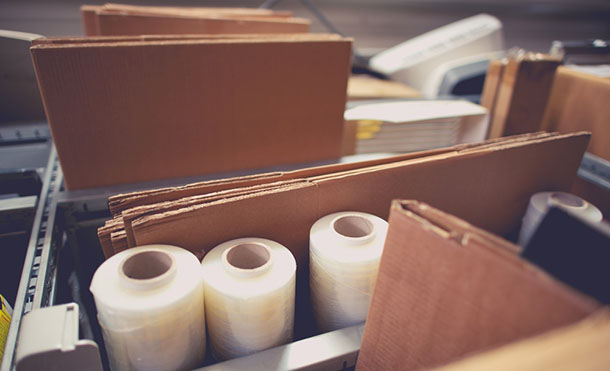
Although corrugated board is a much stronger material than most people realize, many goods will still require some additional protection. Air Sea Containers offers a wide selection of protective packaging materials, including an industry-leading range of eco-friendly packaging materials:
- Complete air pillow packaging systems featuring pillows made from biodegradable plastic
- Reusable and recyclable refrigerant gel packs made with a non-toxic refrigerant safer than dry ice
- Vermiculite, a mineral perfect for cushioning and moisture absorption, in a variety of grades and sizes
- Packing peanuts in both traditional Styrofoam and plant-based biodegradable styles
- Dunnage air bags to protect your cargo from shifting in transit
- Shrink wrap and bubble wrap for restraining and cushioning goods
- Rugged plastic adhesive packaging tape and accessories like tape dispensers
These state-of-the-art packaging materials are ideal for protecting and preserving a huge variety of different goods—but, of course, they can only go so far. The best packaging materials in the world may not protect boxes that aren’t being handled carefully.
Tips for Safely Handling Corrugated Boxes
Once you’ve got your boxes, it’s important that you and your employees know how to handle them correctly and safely. The following tips can help you implement practices to maintain the integrity of your shipping boxes and keep their contents secure:
- Make sure that boxes with fragile contents always have the appropriate warning labels.
- Always move the blade away from yourself rather than toward yourself when using a box cutter.
- Employees should wear gloves when possible and should be careful around the edges of boxes—it’s easier to get a paper cut than you might expect.
- Ensure that boxes are being stored away from moisture sources—while corrugated boxes will protect their contents from moisture, it can ruin the boxes and make them hard to move. Try to store boxes away from egress points such as doors and loading docks, which can allow ambient moisture to enter.
- If moisture levels are a recurrent problem for your facility, consider purchasing a dehumidifier system to protect the integrity of your corrugated boxes.
- Understand the Emergency Response Guidebook and keep a copy on hand in your warehouse.
- Always store corrugated boxes and pallets off the floor whenever possible.
- Ensure that pallets are free of nails, large splinters, and other sharp objects that can damage corrugated boxes.
- Workers should never toss, drop, or drag shipping boxes. Whenever possible, they should be handled only with tools like pallet jacks, forklifts and hand trucks rather than manually.
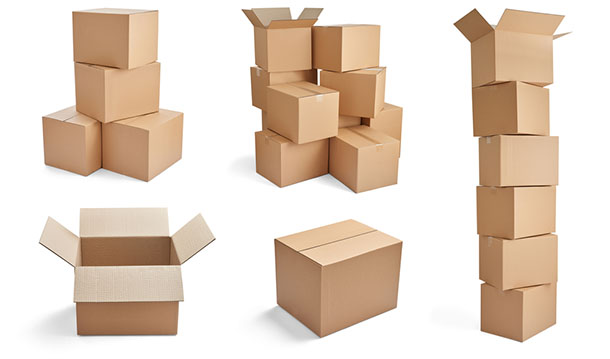 Corrugated shipping boxes are a tried-and-true shipping solution that your business can benefit from. Their cost-effective nature paired with durable construction is a winning combination that protects millions of shipments around the world every day. Air Sea Containers is proud to act as a partner to our customers in hazmat and non-hazmat shipping to deliver the best-corrugated packaging solutions anywhere.
 If you need help getting started on your custom corrugated packaging solution, Air Sea Containers’ packaging experts are here to help! Call us at (866) 596-9448 or contact us online. You’ll see that there’s more than you might expect inside our corrugated shipping boxes!


