
5 Safety Guidelines for Using Metal and Plastic Pallets
- By Cory Levins
- 22 nov 2019
Shipping pallets are indispensable for bringing goods to businesses and consumers all around the world. They’ve even been called the world economy’s single most important object thanks to their ubiquity, and there could be as many as two billion of them in use in the United States today. Many sectors such as logistics, storage and manufacturing require dealing with pallets day in and day out.
Metal and plastic pallets are increasingly popular for their durability and cost-effective nature. What’s important to know about working with these pallets, as well as with pallets in general? The shipping and packaging experts at Air Sea Containers have some helpful answers lined up below.
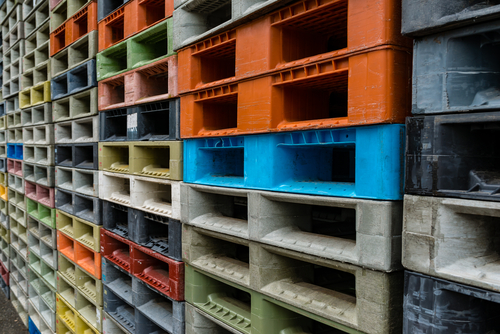

1. Always use the right pallet material for the job.
Safety depends on choosing the correct pallet material for your cargo. The most common material types are:- Wooden Pallets: The least expensive and most common type of pallet. Durable enough for most types of goods, but may not be strong enough to support the heaviest cargo. It can be vulnerable to moisture, mold and pests.
- Plastic Pallets: A highly durable type of pallet that’s resistant to most weather, moisture and even chemicals. They’re made from materials like polyethylene and increasingly popular. However, they’re often more expensive than wooden pallets.
- Metal Pallets: Metal pallets are among the strongest and most durable types of pallets, although they’re also more expensive than other types. Great for businesses that have the opportunity to reuse pallets.
- Paper Pallets: Paper pallets are made from extremely thick and highly compressed corrugated paperboard. Less durable than other materials but more eco-friendly and cost-effective, paper pallets are ideal for shipping lighter goods.
2. Ensure that your pallet has the right features.
Different types of pallets also have different feature sets. Some of the most common features you’ll find on pallets include:- Two-Way/Four-Way Entry: Some pallets are built with double-sided entry for pallet jacks and forklifts, while others are built with entry on all four sides.
- Open-Deck/Solid-Deck/Double-Face: Open-deck pallets are the traditional slatted pallets, which are good for most cargo types, but can be a problem for smaller items. Solid-deck features a single solid piece on their top side. Double-face pallets include another solid deck on the bottom of the pallet, making both sides usable and providing extra support.
- Block/Stringer: Block pallets have their decks supported by four to 12 rectangular blocks, sometimes with support pieces underneath. Stringer pallets use stringers (long slat-like pieces) to create a frame under the deck that supports the pallet. Either can provide sturdy support for cargo.
3. Use caution when walking on pallets.
Walking on pallets is an easy way to pick up an ankle injury for those who aren’t careful. It’s all too easy for a person’s foot to slip between the slats and become twisted in a split second. If your foot does slip through a pallet’s slats, resist the urge to jump or flinch–which can easily cause an ankle injury–and calmly remove your foot instead. If employees in your warehouse frequently walk on pallets, consider switching to solid-deck pallets rather than open-deck to improve employee safety.
3. Don’t use pallets as personnel lifts.
Metal and plastic pallets might seem sturdy, and it can be tempting to combine them with forklifts to allow personnel to reach higher shelves. Most pallets are rated to hold several thousand pounds, but there’s a key difference. Pallets are designed for distributed weight, like a cube of packaged goods, not the concentrated weight of a person standing on one. Never use anything except a ladder or a dedicated personnel lift to reach high shelves.4. Consider whether you might need spill control pallets.
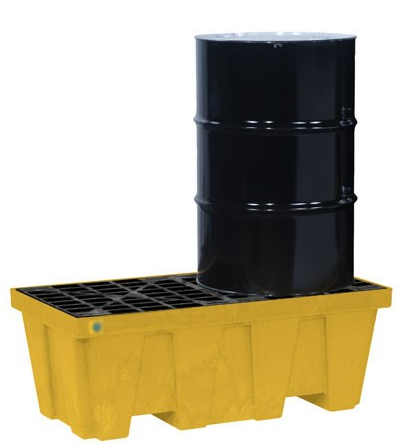
Spill control pallets can be critical safety tools for businesses that store chemicals in drums. These pallets feature built-in sumps that catch and contain leaks before they can spread, making them potential difference-makers for hazardous chemical emergencies. Our pallets have enough capacity to hold the contents of a full 55-gallon drum, and we offer both plastic pallets and steel pallets to contain any kind of chemical spill. All of our models are designed to meet or exceed relevant safety standards like NFPA 1 Uniform Fire Code, EPA 40 CFR 264.175 and OSHA 29 CFR 1910.106(e)(2)(iii).
Justrite® 2-Drum EcoPolyBlend Spill Control Pallet
Air Sea Containers is your number one expert source for safe and effective shipping solutions. Our shipping professionals can help you find what you need at the right price. Just give us a call or contact us online.


