
IBC totes can be exposed to extreme temperatures during transportation. Often, these totes are used to transport temperature-sensitive materials, many of which are liquids that can be damaged by freezing. In a perfect world, we’d always have the environment at the perfect temperature—but in our world, it’s critical to know what to do when it’s not. Here’s a guide to keeping your IBC tote warm and insulated when it counts most.
Basics of IBC Containers
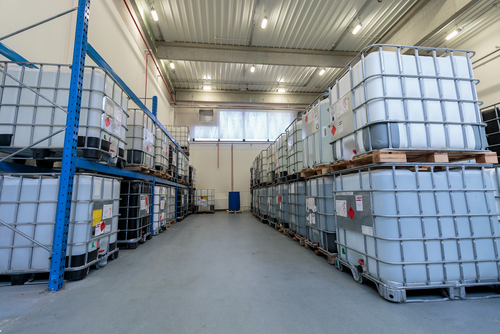
An IBC tote consists of a large polyethylene container (referred to as the “bottle”) set on a metal rack that allows workers to lift it with a forklift or pallet jack. A metal cage surrounds the bottle to protect it from impacts and puncturing. However, that cage doesn’t do anything to keep the bottle insulated.
Thus, it’s clear that the most important part of keeping an IBC tote warm is to insulate the bottle successfully. How does one insulate the bottle of an IBC container? Let’s find out.
Keeping an IBC Tote Warm
The best way to keep an IBC container warm is to store it in a temperature-controlled environment. When possible, store it inside in an insulated, heated and air-conditioned building. Many logistics providers now offer access to temperature-controlled storage and transportation, and remote temperature monitoring is an effective tool that lets you quickly spot and troubleshoot temperature fluctuations through an app.
What do you do, however, when conditions don’t allow IBC containers to be stored in a temperature-controlled environment? Some shippers introduce additives into their liquid goods to prevent freezing by altering the substance’s freezing point. If you choose this option, use extreme care when selecting and applying the anti-freezing agent, and make sure to follow the safety regulations for the materials you’re working with.
Remember that concrete floors can act as heat sinks that draw heat away from an IBC container’s contents. Most IBC totes come pre-installed on an integrated pallet, which helps to prevent this effect, but it can still be helpful to store totes as far away from the floor as possible to further minimize heat loss. If the totes have to be stored on the floor, a sheet of plywood or rigid foam underneath them can help curb heat loss as well.
Stacking IBC totes close together can also help keep them warm. This practice helps reduce the totes’ surface area, which in turn reduces the amount of heat that they lose. Although close stacking won’t by itself prevent a tote’s contents from freezing, it helps to keep them warmer for longer.
Heater Jackets for IBC Containers
Sometimes, you need some better technology in order to turn up the heat. If you’re shipping IBC containers with temperature-sensitive contents and you want the best protection with the most precise control, you’ll want to look into a tote heater blanket like the Powerblanket Insulated Tote Heater.
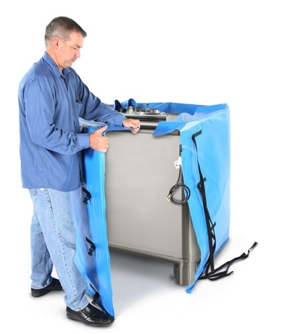
Insulated tote heating blankets are easy to use and highly effective for keeping IBC containers warm. They’re made from thick, rugged vinyl and wrap completely around an IBC tote, using a low-wattage electrical heating system that consumes minimal energy. The Powerblanket series’ GreenHeat technology distributes heat evenly throughout an IBC container’s contents, preventing the product from scorching, and adjustable thermostats to help keep your liquids at the perfect temperature.
Air Sea Containers offers the Powerblanket IBC tote heater series in both 275-gallon and 330-gallon models, each with adjustable straps to ensure a tight fit on your IBC container. Thanks to their removable tops, Powerblanket tote heaters even offer easy access to the container’s contents without removing the heating blanket. Need to know the temperature of your goods? Use the Powerblanket’s built-in Thermo Probe to get an instant reading whenever you need it.
Got more questions about IBC containers and how to preserve their contents? Air Sea Containers’ packaging experts would love to help. Call us at (866) 596-9448 or contact us online for more information.
Purchase Your IBC Tote Today!