Summary of the HMIS
- The HMIS is a proprietary classification system created by the American Coatings Association.
- It is similar to, but should not be confused with, the NFPA Fire Diamond.
- HMIS labels rate hazardous materials using numeric ratings in the following categories: health hazards, flammability, physical hazards.
- HMIS labels also include a code or pictograms recommending specific PPE (the primary way to distinguish it from the NFPA label).
- Although HMIS information is not strictly required, it is often included on SDS by American companies.
The Hazardous Materials Identification System (HMIS) is a rating system for hazardous goods. The role of HMIS labels is to identify how dangerous a specific substance, compound, or material is using a four-tier, five-level classification system.
Here, you will find everything you need to know about the Hazardous Materials Identification System. Learn how to read an HMIS label and what criteria and specifications go into each tier and hazard level. It’s also important to know how to differentiate it from other rating systems.
Origins and Specifications
The Hazardous Materials Identification System (HMIS) is a registered trademark and a proprietary classification system. It’s created and maintained by the American Coatings Association (ACA) to promote workplace safety.
The HMIS was specifically designed to comply with the labeling requirements outlined by OSHA’s Hazard Communication Standard (HCS or HazCom). It provides workers and the general public with a simple, easy-to-read threat and hazard identification system without the need for advanced chemical science knowledge.
HMIS labels typically take the form of stickers or placards that can be applied to any appropriate packaging, such as bottles, drums, barrels, or custom shipping boxes. Although HMIS labels may vary slightly in appearance or color depending on the label’s age and rated hazardous material, all versions employ a similar system. The label displays four colored and labeled rectangular stripes, each with a hazard type and a danger level represented by a number.
Differences with the NFPA Fire Diamond
Although the HMIS is similar in appearance to the National Fire Protection Association’s (NFPA) NFPA 704 labeling system (better known as the Safety Square or Fire Diamond), their purposes are slightly different.
NFPA 704 is aimed mainly at firefighters and emergency personnel. It guides them on the flammability and types of safety equipment they need when responding to an incident involving hazardous materials.
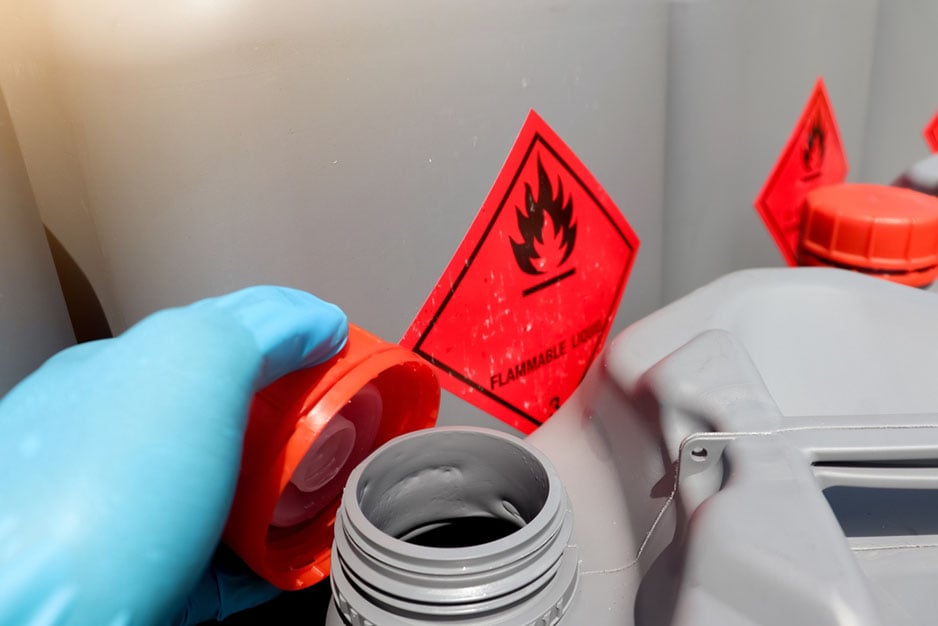
Although using both systems’ hazmat labels is permitted by OSHA HazCom (as long as it meets specific requirements), the ACA and the NFPA discourage mixing or hybridizing the two systems due to their existing similarities.
OSHA Safety Advisory
The HMIS system uses a numeric classification level with an ascending progression (from lowest to highest danger level: 0, 1, 2, 3, 4).
Due to the potential for confusion, the OSHA advises against using multiple hazardous material classification systems if the ratings contradict or cast doubt on the validity of the label information (2013 interpretation letter).
A good practice is to avoid using HMIS labels in conjunction with another hazard classification system using a descending numeric classification level (lowest to highest: 4, 3, 2, 1) because they may appear to contradict each other.
For example, a highly flammable substance considered under HMIS to be Flammability level 4 may be classified under the United Nations’ Globally Harmonized System of Classification and Labeling (GHS) as Flammability category 1.
Learn More About Using Hazmat LabelsHow to Read an HMIS Label
An HMIS label typically features the following information:
- Blank space, reserved for the hazardous material’s name
- Blue stripe: Health hazards, labeled “HEALTH” with two squares
- Red stripe: Flammability, featuring one square
- Orange stripe: Physical hazard, featuring one square
- White stripe: Personal protection
Although not required, some HMIS label variants may also feature additional blank spaces to accommodate extra information, such as the hazardous material’s manufacturer.

Blue Stripe: Health Hazards
The top stripe of an HMIS label denotes the corresponding material’s health hazards. It features two squares: One for the numeric hazard assessment level (or simply hazard level) and another to differentiate chronic health hazards from acute-only.
The ACA’s definition of a health hazard differs from the one used by the NFPA. This means that the HMIS health hazard rating is not interchangeable with the Fire Diamond’s equivalent rating (blue diamond) and should not be confused or substituted.
There are five health hazard levels:
4: Severe health hazard. Single or repeated exposure to this material may cause significant, life-threatening, or permanent damage.
- Example: Dimethyl sulfate.
3: Serious health hazard. Exposure to this material may inflict significant injuries requiring prompt medical treatment.
- Example: Sulfuric acid.
2: Moderate health hazard. Exposure to this material may cause temporary or minor permanent injuries.
- Example: Chlorobenzene.
1: Slight health hazard. Exposure to this material may cause irritation or minor reversible injuries.
- Example: Formaldehyde, 8% (v/v)
0: Minimal health hazard. This material presents no significant health risks.
- Example: Purified water
If the second square contains an asterisk symbol (✱), this material poses a chronic health hazard. High or repeated exposure to these rated hazardous materials can create long-term health complications, such as anemia, emphysema, or kidney damage.
An example of this is Warfarin, a material with a health hazard level of 3✱, denoting a serious and chronic health hazard. Exposure to warfarin can cause chronic bleeding, anemia, liver failure, and kidney failure.

Red Stripe: Flammability
The second stripe on the HMIS label displays the material’s flammability using a numeric hazard level. There are five flammability levels. The definitions are as follows:
4: Severe fire hazard. This level is typically reserved for flammable gases, highly volatile flammable liquids, and materials susceptible to spontaneous combustion if exposed to air.
- Example: Pentane
3: Serious fire hazard. Materials at this level can ignite in all or almost all average atmospheric temperatures. It includes the following: Liquids (flashpoint between 73°F and 100°F) and flammable liquids (flashpoint under 73°F and a boiling point above 100°F).
- Example: Benzene
2: Moderate fire hazard. Materials at this level can ignite if exposed to high temperatures or heated for a short period. It includes liquids with a flashpoint between 100°F and 200°F.
- Example: Benzalacetone
1: Slight fire hazard. These materials can ignite after significant periods of heating. This level covers liquids, semisolids, and solids with a flashpoint above 200°F.
- Example: Diethyl phthalate
0: No fire hazard. These materials will not ignite or burn whatsoever.
- Example: Nitric acid, 65%

Orange Stripe: Physical Hazards
The third stripe on the HMIS label displays the material’s reactivity hazard potential. OSHA defines seven types of reactivity hazards. These are compressed gases, explosives, organic peroxides, oxidizers, pyrophoric materials (ignites upon contact with air), water reactives (explodes or reacts violently upon contact with water), and other unstable reactives.
There are five physical hazard levels:
4: Severe physical hazard. This level is reserved for the most unstable materials, capable of readily exploding if exposed to air, water, decomposing, polymerizing, or self-reacting.
- Example: Nitroglycerin
3: Serious physical hazard. Materials at this level are unstable and may form explosive compounds if exposed to water, decomposing, polymerizing, self-reacting, or undergoing another change, even under normal temperatures and pressures.
- Example: Sodium azide
2: Moderate physical hazard. Materials at this level are unstable under average temperatures and pressures but present a low risk of explosion. They include materials that react violently to water or form peroxides when exposed to air.
- Example: Acetone
1: Slight physical hazard. Materials at this level are typically stable but may self-react under abnormal temperatures and pressures, react to water, or spontaneously undergo hazardous polymerization.
- Example: Ammonium nitrate
0: No physical hazard. Materials at this level are stable, non-explosive, do not react to air or water, condense, decompose, undergo undesired polymerization, or self-react.
- Example: Potassium acetate
Although HMIS labeling does not differentiate between the types of physical hazards, you can use the numeric value in conjunction with another hazmat label or placard to determine the danger involved.
For example, if you see shipping barrels with the following signage:
- HMIS label, Physical hazard level 3 (Serious physical hazard)
- Hazmat placard, Class 4.3 (Dangerous when wet)
The hazmat placard denotes that the substance is dangerous when exposed to water, and the HMIS label indicates the material can form explosive compounds. So, you can deduce that the material inside the barrels is primarily hazardous when exposed to water.

White Stripe: Personal Equipment
The fourth stripe on the HMIS label indicates which personal protective equipment (PPE) you should use when handling or working with the material. Standard HMIS labels use a letter code system to denote specific combinations of PPE.
The standard HMIS letter code system for personal protective equipment is as follows:
- A: Requires safety glasses only
- B: Requires safety glasses and protective gloves
- C: Requires safety glasses, protective gloves, and a protective apron
- D: Requires a face shield, protective gloves, and a protective apron
- E: Requires safety glasses, protective gloves, and a dust respirator
- F: Requires safety glasses, protective gloves, a protective apron, and a dust respirator
- G: Requires safety glasses, protective gloves, and a vapor respirator
- H: Requires chemical splash goggles, protective gloves, a protective apron, and a vapor respirator
- I: Requires safety glasses, protective gloves, and a respirator rated against dust and vapors
- J: Requires chemical splash goggles, protective gloves, a protective apron, and a respirator rated against dust and vapors
- K: Requires a full airline respirator mask or hood, protective gloves, a full hazmat suit, and hazmat boots (e.g., a complete CBRN protection kit)
- L-Z: Reserved for local applications, such as site-specific labeling
The definitions of letter codes L to Z vary from site to site. Ask the facility’s supervisor, safety officer, or hazmat specialist for specific descriptions.
Some label manufacturers may print variant labels using tick boxes for each type of PPE, while others may use pictograms depicting the recommended equipment. For example, suppose you see a pallet box with a variant HMIS label displaying pictograms for safety glasses, gloves, and a dust respirator in the white section. In that case, this label is equivalent to a standard label featuring the HMIS letter code E.
Browse Our Custom Shipping BoxesVersions and Labeling Differences
The first version of the HMIS, referred to as HMIS I, was released by the National Paint and Coatings Association (NPCA) several years before changing its name to the current ACA. Although the HMIS was revised three times, with the latest version being HMIS IV, the only significant differences are between the labeling and formats of the obsolete HMIS I and II labels and those of the current HMIS III and IV.
Under HMIS I and II, the third hazard type was Reactivity, represented by a yellow stripe. The definition of reactivity employed under this older version is identical to the one used by the NFPA Fire Diamond’s yellow section. Hazard level numbers ranged from 0 (low hazard) to 4 (high hazard).
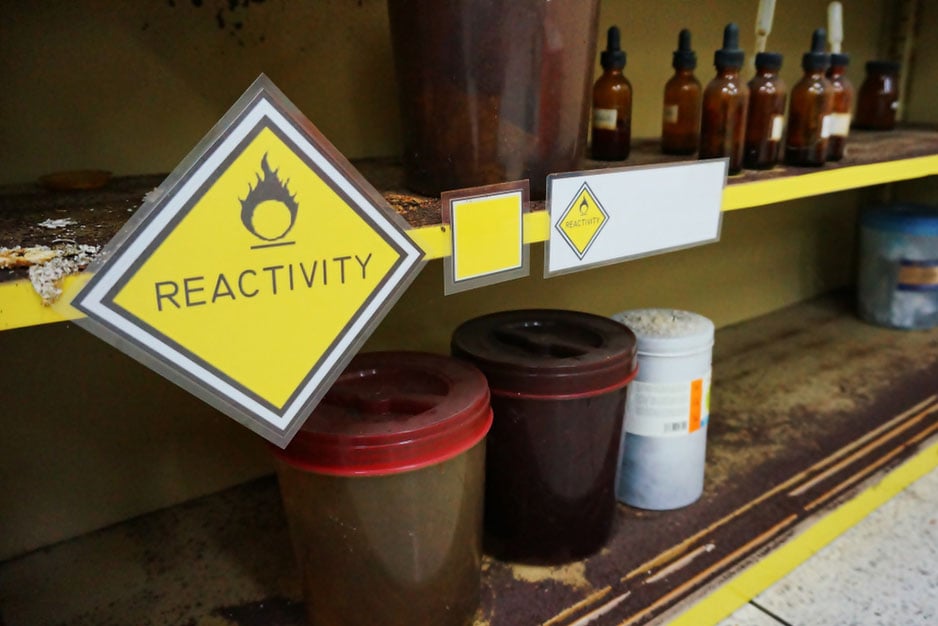
HMIS III revised the meaning of the third hazard type, changing its name from Reactivity to Physical Hazard and replacing the yellow stripe with an orange one. Only labels featuring the orange Physical Hazard are compliant with the latest definitions.
The ACA made these changes for two reasons: compliance with the OSHA’s definition of a physical hazard and further distinguishing the HMIS from the Fire Diamond. The corresponding hazard levels are not identical to the updated Physical Hazard definitions and are not interchangeable.
If you see an HMIS label with a yellow stripe and the word Reactivity, this is an older label made according to obsolete HMIS I or II specifications. The ACA recommends updating older labels to newer versions whenever possible to prevent incidents of confusion.
Additionally, under HMIS I and II, the definitions used for the Flammability numeric hazard levels were identical to those used for the NFPA Fire Diamond’s red section. In contrast, the second revision (HMIS III) introduced an updated definition matching OSHA standards.
Where to Find HMIS Information
You can typically find the HMIS information and classification levels of a specific manufacturer’s hazardous material on its corresponding Safety Data Sheet (SDS), formerly known as a Material Safety Data Sheet (MSDS).
However, while OSHA requires manufacturer SDSs to comply with their regulations, using HMIS is not explicitly required. It is up to each manufacturer to include HMIS data on their SDSs. Since the ACA is an American organization, you will typically find HMIS information on data sheets for materials produced by American manufacturers or for the United States market in general.
Air Sea Containers, Your Hazmat Packaging Partner
Packing and shipping hazardous materials requires a keen knowledge of all applicable laws and regulations, including proper labeling rules.
At Air Sea Containers, we understand the challenges of navigating legislation and labeling systems. Let us help you make hazmat packing and shipping easy with our selection of UN-rated, OSHA-compliant boxes, cans, drums, barrels, and ancillary packaging materials. We also offer a wide array of labels and placards to make labeling and identification as straightforward as possible.
Image Credits
As-Syakir/Shutterstock.com
MeSamong/Shutterstock.com
Dusan Petkovic/Shutterstock.com
Forance/Shutterstock.com
dreii/Shutterstock.com
Prapon Srinakara/Shutterstock.com
anut21ng Stock/Shutterstock.com
chemical industry/Shutterstock.com
bibiphoto/Shutterstock.com
mewaji/Shutterstock.com