In addition to protecting yourself and your workers, approved flammable safety cabinets are required by the Occupational Safety and Health Association (OSHA). Failure to comply with OSHA regulations when storing hazardous materials can lead to large fines, and if someone is injured due to your non-compliance, you could face lawsuits or even jail time.
Storing combustibles and hazardous chemicals properly is vital. If you are in the market for a flammable safety cabinet, here are a few things to keep in mind.
Pay Attention to Build Quality
The National Fire Protection Association (NFPA) sets codes for various types of flammable materials. The primary code for flammable and combustible liquids is NFPA 30, and flammable safety cabinets must be designed and built to meet the criteria set forth by this code.
Cabinets used to store flammable and combustible liquids must be constructed using double-walled steel with an insulating air space in the top, bottom, sides and doors. Joints must be welded or riveted, and the door must have 3-point latching arrangements. The cabinet must have labels that say “Flammable – Keep Fire Away.” If a cabinet is lacking any of these features, it does not meet NFPA 30 or OSHA standards.
Make Sure the Cabinet Is Properly Vented
While cabinet venting is not required by NFPA 30, it’s best to talk to a local fire inspector or fire marshal to learn about venting requirements in your area. If you aren’t sure of the requirements when shopping for a cabinet, choose one that comes with dual vents and bungs. If the vents are not used, the bungs should be kept in place as a seal.
It may also be helpful to talk with an Environmental Health and Safety Officer, a professional engineer or an industrial hygienist to determine whether your cabinets should be vented or not. If they are vented, make sure the vent system meets all regulations without compromising the cabinet in any way.
Look for Grounding Lugs
Flammable safety cabinets are not required of federal regulations to include grounding lugs. Grounding is highly advised, however, to eliminate the possibility of static electricity, which occurs as the result of a buildup of electric charge and can cause a spark.
If you plan on engaging in activities like pouring waste into a drum funnel or pumping liquid out of a drum inside of the safety cabinet, grounding is even more important. These processes can generate static electricity, so when engaging in them, the cabinet should always be connected to an earth ground.
In 2017, an explosion caused by static electricity killed one worker and injured dozens of others at a cosmetics plant in New York. Excess material spilled onto the surface of a container while it was being filled. Wiping the spill away caused a static electricity spark which resulted in the deadly explosion. While grounding may not be required by law, it is an important step that can help prevent tragedies like this.
What to Store in Flammable Safety Cabinets
Once you’ve chosen a flammable safety cabinet, it’s important to understand what can–and cannot–be stored inside it. Per OSHA standards, flammable liquids are broken down into four categories. Safety cabinets can be used to store up to 60 gallons of Category 1, 2 or 3 flammable liquids or up to 120 gallons of Category 4 materials.
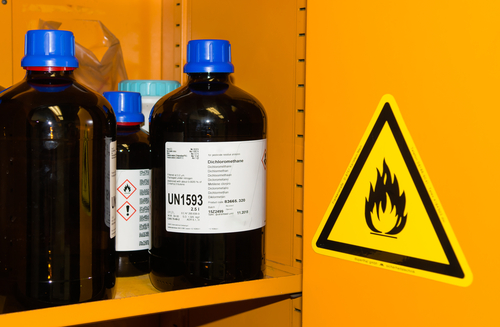
Certain chemicals are not flammable on their own, but they act as accelerants when exposed to fire. Oxidizers, for example, release oxygen, which intensifies fires. These products should not be stored inside flammable safety cabinets. Additionally, chemicals that could cause a reaction when combined should not be stored together inside a cabinet.
It is also important to use the right types of containers inside safety cabinets. Chemicals should be stored in containers made from the same material they were originally packaged in, and lids must always be sealed tightly. Avoid storing paper-based packaging materials inside cabinets to eliminate a potential fire hazard.
While flammable safety cabinets are vital for businesses that use and store flammable and combustible liquids, they are only effective when used properly. Be sure to purchase cabinets that are appropriate for your needs, and store chemicals correctly to avoid potentially devastating consequences.