Today, we’ll look at five important organization tips to follow to get the most protection and performance out of your flammable safety cabinets. These key factors aren’t a complete list of every consideration you’ll need to make—but they’re a good baseline of safe organization from which you can start.
1. Label all chemicals properly and completely.
The best place to store a hazardous chemical is always in the manufacturer’s original container with the manufacturer’s original label. Never alter or remove a manufacturer’s original label for a hazardous chemical. In general, labels should always contain the following information:
- Which chemical is in the container
- Which hazards the chemical presents
- Contact information for the manufacturer
You’ll also need to make sure that Material Safety Data Sheets (MSDS) are readily available on-site for anyone who will use these chemicals. These sheets provide essential data on the health and safety risks of the chemicals you’re working with.
2. Check to ensure that you’re not storing incompatible chemicals together.
Storing the wrong chemicals in a cabinet together can have devastating effects in the event that a disaster, such as an earthquake, damages multiple containers inside. It can result in the release of toxic gases or other dangerous by-products—so it’s important to be familiar with what you can and can’t store together.
A list of common incompatibles includes, but isn’t limited to:
- Flammable solvents such as paint thinner with oxidizers such as bleach
- Nitric acid with acetone or other flammables
- Ammonium nitrate with flammable liquids
Best practices dictate that only flammable or combustible materials should be stored in flammable cabinets. Storing other types of hazardous chemicals in these cabinets can result in incompatibles accidentally being stored together. In general, different classes of hazardous chemicals should not be stored in the same storage spaces.
3. Have spill containment and fire extinguishing materials at the ready near your flammable cabinets.
Hopefully, you’ll never have to deal with a chemical spill or, even worse, a fire—but it’s critical that you be prepared if you do. That means investing in proper fire suppression materials and spill containment systems and keeping them close to the cabinets where you’re storing flammable chemicals.
A chemical fire extinguisher is one of the most important first-line fire suppression tools. However, not all fire extinguishers are the same—you should ensure that your facility has the correct type of fire extinguisher on hand. Using the wrong type may be ineffective or even make a fire worse, so make sure you’re familiar with the different varieties.
Air Sea Containers offers great options for spill containment. Our NFPA-compliant EcoPolyBlend™ spill containment equipment is created to resist the harshest chemicals and contain even relatively large spills, preventing injury, property damage and environmental harm.
4. Ensure that the cabinets you’re using are right for your application.
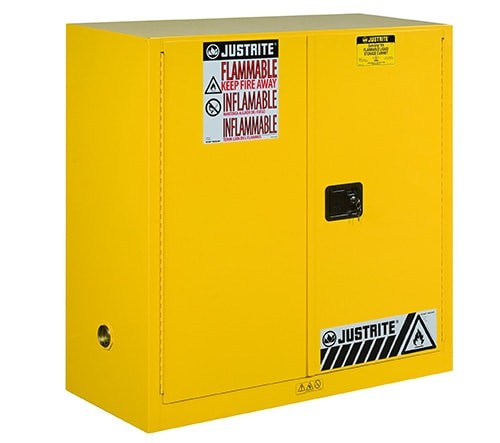
Air Sea Containers offers numerous different models of flammable safety cabinets, constructed according to OSHA and NFPA fire safety standards for the performance you need. They also include an industry-leading range of safety features that make them perfect for a wide variety of applications, including:
- Double-walled 18-gauge steel construction
- Self-latching doors that automatically lock under fire conditions
- Vents with flame arresters
- A variety of build types, including corner and under-counter models
- Security bars to prevent unauthorized access
- Grounding studs to prevent spark discharge when dispensing chemicals
To decide which model is right for your application, make sure to take a look at the NFPA’s hazardous materials codes to see what features it requires.
5. Perform an annual inspection on all flammable cabinets.
Consistency and diligence are the keys to better safety practices, and that means performing consistent inspections on your flammable cabinets. Even—and perhaps especially—if you rarely use the materials in your flammable cabinets, you should make sure you perform a thorough inventory and inspection at least once a year, including the following:
- Checking that all chemicals are properly labeled.
- Looking for leaking or otherwise damaged containers.
- Making sure that no chemicals have accidentally been stored with incompatibles.
- Taking a complete inventory to ensure that no dangerous chemicals are unaccounted for.
Storing flammable chemicals is always challenging because of the high stakes it presents. Commitment to following best practices consistently is the best way to address those challenges, and, fortunately, thanks to our wide selection of high-performance flammable cabinets, Air Sea Containers can help. To learn more about our fire safety options, call us at (866) 596-9448 or contact us through our website!