
Your Ultimate Guide to Shipping Perishables
- By Cory Levins
- 5 nov 2019

Most Americans today can go to a grocery store in Kansas and get fresh salmon, or pick up a temperature-sensitive medication from their pharmacist no matter where they live. These advances are sometimes taken for granted, but they’re made possible by sophisticated logistics operations that bring perishable goods to consumers.
Shipping perishables is no joke. It’s a specialized, high-stakes, sometimes-complex task that many companies spend years perfecting. There are many facets to getting logistics right for perishables, and businesses can’t allow any area to fall by the wayside. From packaging design to regulatory compliance, logistics companies and regulators will expect you to have everything in order.
Whether your business is new to shipping perishables or you’re looking for ways to refine your cold chain logistics, use this guide to help identify the challenges that perishables shippers face and find the tools to address them. Air Sea Containers has over 25 years of experience in helping our customers find their ideal solutions to the challenges of perishables shipping, and we’re always ready to share our knowledge.
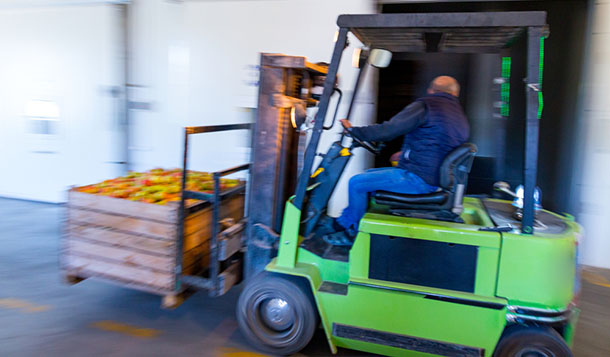
Let’s begin with a definition of what we can consider perishable goods. We’re talking about goods that have any combination of the following characteristics:
Simply put, if your products’ quality depends on how fast and at what temperature they get to the consumer, you’re probably shipping perishable goods. That means that your business and your employees take on a new level of responsibility for your products and how they’re transported.
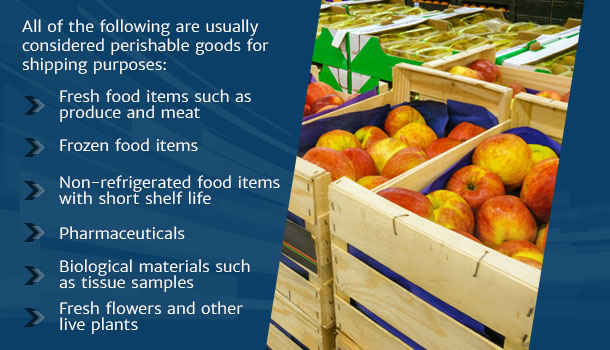
Food is the first thing that springs to mind when most people think of perishable goods, but there are actually several different categories. All of the following are usually considered perishable goods for shipping purposes:
Some goods, such as grain products and dried fruits, are considered “semi-perishable” because they’re hardier and more stable than perishable goods, but still need careful handling. Others, such as canned foods and dried beans, are considered “non-perishable,” although most still won’t truly last forever.
When it comes to perishables, there’s no one-size shipping solution for each item type. Every specific perishable good is different and requires special considerations—so let’s take a look at what some of these factors are.
Perishables shipping practices directly affect consumer safety because the goods being shipped often end up in people’s bodies or in their homes. To make sure your goods are safe for consumption, your supply chain will need to master the fundamentals of perishables shipping, including:
Remember that many items can still be perishable even if they don’t require refrigeration. For example, potatoes are generally not refrigerated, but they’re still highly vulnerable to damage from heat and rot (and can even let off a highly toxic gas if they’re allowed to decompose in a confined space for too long). Pharmaceuticals are generally another temperature-critical category because a difference of even a few degrees can often create dangerous effects, even when the products are stable at room temperature.
So, how can your business get started solving the many challenges of perishables shipping? First up: get your enterprise grounded in the key regulations.
Whether you’re shipping your goods by ground, sea or air freight, your employees will need to know about the relevant regulations and codes for perishables shipping. Trade associations and government regulators set these codes to ensure that perishables are transported safely.
Finally, don’t forget that international shipping can involve customs holds of 24 to 48 hours. For perishable goods, that can be a long time indeed, so make sure your logistics strategies address this possibility and provide resources to keep your goods cold while in customs.
Generally, the terms “cold chain” and “cool chain” refer to logistics providers that use temperature-controlled warehouses, trailers and shipping containers (also called “reefers”) to protect perishable goods. These services are an integral part of safe shipping practices for perishable goods because they provide a controlled and monitored environment for transportation.
For many businesses, it doesn’t make sense to make the enormous capital investment that’s often required to do cold chain shipping in-house. Thus, finding a reliable cold chain logistics partner is often a critical step toward safe and efficient perishables shipping. When evaluating a cold chain provider, you’ll want to look for the following traits:
Today’s refrigerated logistics companies have more technology available than ever. So, despite sky-high demand for cold chain services, it’s still important to be choosy and select a cold chain or cool chain provider that offers access to the latest advances. Easy communication, speedy service and technological expertise are always important, but when you’re shipping perishables, they’re non-negotiables.

Selecting the right packaging design is another critical step toward shipping perishables safely, sustainably and cost-effectively. If you have a reliable cold chain partner and your goods won’t spend much time outside of a temperature-controlled environment, you may not need extensive temperature-controlled packaging—but the unexpected can always happen, so it may be preferable to use a little extra packaging in the event that your cargo encounters delays.
Most businesses that ship perishables use these common packaging methods to achieve temperature control:
Efficient and cost-effective perishables shipping can be a big challenge for businesses both large and small. Air Sea Containers has spent over 25 years listening carefully to the needs of our customers who ship perishables, refining our selection to ensure we’ve got the shipping solutions you need, and we’re now a leading provider of perishables packaging materials.
That’s because we’re a one-stop shop for the best and most advanced materials for shipping most kinds of perishable goods–from pharmaceuticals to biological samples to food and beverages. Some of our customers’ top choices for perishable goods packaging materials include:

Consumer products like food and pharmaceuticals are truly global industries in the 21st century, and many of the businesses that hope to compete in these fields will need to master perishables shipping first. To talk to our perishables packaging experts, call us at (866) 596-9448 or contact us online for quotes and more. We’re ready to help our customers ship even the most challenging perishables while maintaining the highest safety standards.
Shipping perishables is no joke. It’s a specialized, high-stakes, sometimes-complex task that many companies spend years perfecting. There are many facets to getting logistics right for perishables, and businesses can’t allow any area to fall by the wayside. From packaging design to regulatory compliance, logistics companies and regulators will expect you to have everything in order.
Whether your business is new to shipping perishables or you’re looking for ways to refine your cold chain logistics, use this guide to help identify the challenges that perishables shippers face and find the tools to address them. Air Sea Containers has over 25 years of experience in helping our customers find their ideal solutions to the challenges of perishables shipping, and we’re always ready to share our knowledge.
Defining a Perishable Item
Let’s begin with a definition of what we can consider perishable goods. We’re talking about goods that have any combination of the following characteristics:
- Consumer goods with a short shelf life
- Will spoil or become useless outside of their correct temperature zone
- Will melt if not kept frozen
- Require other special shipping considerations such as specific moisture levels or airtight packaging
Simply put, if your products’ quality depends on how fast and at what temperature they get to the consumer, you’re probably shipping perishable goods. That means that your business and your employees take on a new level of responsibility for your products and how they’re transported.
Commonly Shipped Perishable Goods
Food is the first thing that springs to mind when most people think of perishable goods, but there are actually several different categories. All of the following are usually considered perishable goods for shipping purposes:
- Fresh food items such as produce and meat
- Frozen food items
- Non-refrigerated food items with short shelf life such as bread
- Pharmaceuticals
- Biological materials such as tissue samples and cell cultures
- Fresh flowers and other live plants
Some goods, such as grain products and dried fruits, are considered “semi-perishable” because they’re hardier and more stable than perishable goods, but still need careful handling. Others, such as canned foods and dried beans, are considered “non-perishable,” although most still won’t truly last forever.
When it comes to perishables, there’s no one-size shipping solution for each item type. Every specific perishable good is different and requires special considerations—so let’s take a look at what some of these factors are.
Considerations for Safety in Perishables Shipping
Perishables shipping practices directly affect consumer safety because the goods being shipped often end up in people’s bodies or in their homes. To make sure your goods are safe for consumption, your supply chain will need to master the fundamentals of perishables shipping, including:
- Working with a reliable cold chain logistics partner
- Knowing the specific best practices for shipping your type of perishables
- Using the right insulated packaging solutions to control temperature in transit
- Achieving compliance with the regulations that cover perishables shipping
- Shipping perishables quickly and on a schedule that won’t leave them sitting in the temperature “danger zone”
- Tracing the chain of custody for perishable goods to ensure that all shipping instructions and regulations have been followed
Remember that many items can still be perishable even if they don’t require refrigeration. For example, potatoes are generally not refrigerated, but they’re still highly vulnerable to damage from heat and rot (and can even let off a highly toxic gas if they’re allowed to decompose in a confined space for too long). Pharmaceuticals are generally another temperature-critical category because a difference of even a few degrees can often create dangerous effects, even when the products are stable at room temperature.
So, how can your business get started solving the many challenges of perishables shipping? First up: get your enterprise grounded in the key regulations.
Perishables Shipping Regulations
Whether you’re shipping your goods by ground, sea or air freight, your employees will need to know about the relevant regulations and codes for perishables shipping. Trade associations and government regulators set these codes to ensure that perishables are transported safely.
- Shipping perishables via air freight requires compliance with the International Air Transport Association’s (IATA) perishable cargo rules. The IATA Perishable Cargo Regulations Manual covers all of the major rules you’ll need to know, including comprehensive listings and rules for hundreds of item types, plus valuable advice on how to build a safe and robust cold chain operation.
- Meanwhile, businesses shipping perishables via highway or rail freight should be familiar with the U.S. Food and Drug Administration’s (FDA) Sanitation & Transport Guidance. The FDA offers detailed guides for shippers on how to reduce the risk of damage and contamination for many different types of perishables, including chain of custody and record-keeping procedures.
- Maritime perishables shipping has less specific guidance than some other types, but all maritime shippers should make sure that their cargo follows relevant regulations from the International Maritime Association.
- Employees will also need familiarity with any additional restrictions that freight carriers might impose. USPS, FedEx, UPS and every other major freight carrier all have their own rules about perishables shipping, so be sure to investigate the specific rules that apply in your case.
Finally, don’t forget that international shipping can involve customs holds of 24 to 48 hours. For perishable goods, that can be a long time indeed, so make sure your logistics strategies address this possibility and provide resources to keep your goods cold while in customs.
Cold Chain and Cool Chain Logistics
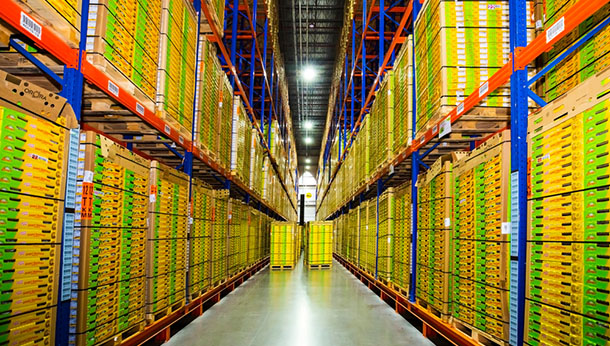
Generally, the terms “cold chain” and “cool chain” refer to logistics providers that use temperature-controlled warehouses, trailers and shipping containers (also called “reefers”) to protect perishable goods. These services are an integral part of safe shipping practices for perishable goods because they provide a controlled and monitored environment for transportation.
For many businesses, it doesn’t make sense to make the enormous capital investment that’s often required to do cold chain shipping in-house. Thus, finding a reliable cold chain logistics partner is often a critical step toward safe and efficient perishables shipping. When evaluating a cold chain provider, you’ll want to look for the following traits:
- Responsive to your needs, answers communications quickly and has reliable points of contact with whom you can develop a good working relationship.
- Offers fast shipping options that ensure perishable goods arrive at their destination as quickly as possible.
- Can provide detailed information about their cold chain and cool chain processes, including the specific levels of refrigeration and temperature support they’re able to offer, and documentation certifying their compliance with relevant regulations.
- Understands international regulations and can provide support in getting perishable items through customs.
- Detailed automatic monitoring and record-keeping of refrigerated units that can automatically provide detailed chain of custody records on demand.
Today’s refrigerated logistics companies have more technology available than ever. So, despite sky-high demand for cold chain services, it’s still important to be choosy and select a cold chain or cool chain provider that offers access to the latest advances. Easy communication, speedy service and technological expertise are always important, but when you’re shipping perishables, they’re non-negotiables.
Packaging Perishables
Selecting the right packaging design is another critical step toward shipping perishables safely, sustainably and cost-effectively. If you have a reliable cold chain partner and your goods won’t spend much time outside of a temperature-controlled environment, you may not need extensive temperature-controlled packaging—but the unexpected can always happen, so it may be preferable to use a little extra packaging in the event that your cargo encounters delays.
Most businesses that ship perishables use these common packaging methods to achieve temperature control:
- Insulated Packaging: After refrigerated shipping, insulated packaging will likely be your primary line of defense for protecting temperature-sensitive goods. Insulation materials can vary widely, from styrofoam to cardboard to aluminum foil blankets, and each has its own advantages. You’ll want to choose materials that are both cost-effective and address the specific needs of your cargo.
- Leak-Proof Packaging: Some perishables can thaw, perspire or leak if they’re not handled correctly, so it’s important to have packaging features such as plastic liners that can contain leaks and prevent them from affecting other cargo.
- Airtight Packaging: Perishables such as baked goods and certain kinds of pharmaceuticals should also be protected by packaging that’s as close to airtight as possible. Several options for airtight packaging are available, from hand-wrapping delicate goods to using rigid plastic containers for items such as cupcakes and donuts.
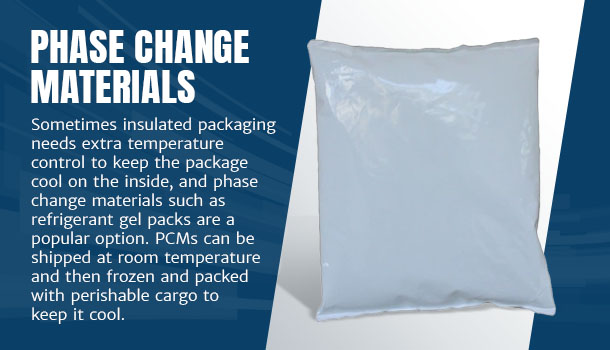
- Phase Change Materials: Sometimes insulated packaging needs extra temperature control to keep the package cool on the inside, and phase change materials such as refrigerant gel packs are a popular option. PCMs can be shipped at room temperature and then frozen and packed with perishable cargo to keep it cool. Best of all, many can then be refrozen and used again for a more sustainable solution.
- Dry Ice: Dry ice, or solidified carbon dioxide, is a common and inexpensive material for shipping materials that need to be kept frozen. It’s effective for keeping perishables below zero, but its surface temperature of -109.3 degrees Fahrenheit means that it can be dangerous to human skin, so safe handling requires special training. Many shippers have detailed regulations about when and where dry ice can be used, and shippers should remember to never let dry ice directly touch any food item.
Perishables Shipping Options from Air Sea
Efficient and cost-effective perishables shipping can be a big challenge for businesses both large and small. Air Sea Containers has spent over 25 years listening carefully to the needs of our customers who ship perishables, refining our selection to ensure we’ve got the shipping solutions you need, and we’re now a leading provider of perishables packaging materials.
That’s because we’re a one-stop shop for the best and most advanced materials for shipping most kinds of perishable goods–from pharmaceuticals to biological samples to food and beverages. Some of our customers’ top choices for perishable goods packaging materials include:
- Our eco-friendly, non-toxic refrigerant gel packs are an excellent choice for refrigerating your goods in transit. They’re safer, cleaner and easier to work with than dry ice, and require no special training to handle safely. Finally, they’re 100 percent biodegradable and reusable, making them an ideal choice for any business that wants to both save money and use more environmentally-friendly materials.
- Styrofoam coolers are among the simplest, most cost-effective and most reliable technologies for shipping perishables. When combined with our refrigerant gel packs, these coolers provide all-day insulation at a low cost. Our coolers also come with outer boxes that can help keep them safe from rough handling in transit.
- For a complete shipping solution for sensitive biological specimens, try our Bio-Freeze and Ultra-Freeze specimen shipping kits. These special packaging kits include a Bio-Bottle that can be frozen and re-frozen to keep specimens at the correct temperature, and some include reusable phase change blocks for the ultimate in cooling power.
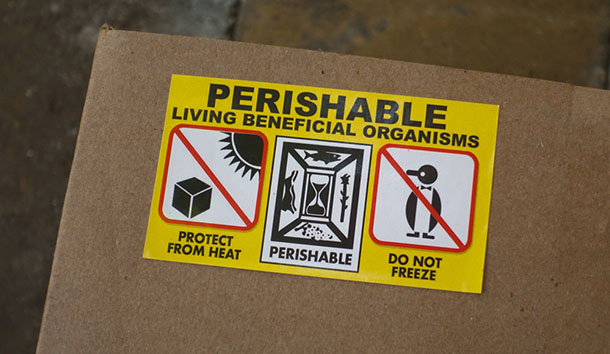
- Finally, don’t forget about shipping labels for your perishables. It’s critical that perishables have refrigerated shipping labels to inform handlers that they have temperature-controlled goods inside. Air Sea’s labels offer a wide selection of messages, including Keep Frozen, Keep Refrigerated and Keep Away from Heat.
Consumer products like food and pharmaceuticals are truly global industries in the 21st century, and many of the businesses that hope to compete in these fields will need to master perishables shipping first. To talk to our perishables packaging experts, call us at (866) 596-9448 or contact us online for quotes and more. We’re ready to help our customers ship even the most challenging perishables while maintaining the highest safety standards.


