
What Is an IBC tank?
- By Cory Levins
- 13 sept 2021

Source: AlexLMX / Shutterstock.com
Summary:- An IBC is bigger than a drum but smaller than a tank container.
- IBCs are highly versatile and naturally palletized.
- IBCs are stackable, making them very space-efficient.
What Is the Purpose of an IBC?
What is an IBC tank? IBC stands for Intermediate Bulk Container. They are industrial containers designed to transport liquids and certain solids and semi-solids, such as powders, pastes or granulated substances. Although many types, materials and form factors exist, the vast majority of IBCs used worldwide have a capacity of either 275 or 330 gallons. The term “intermediate” refers to their capacity, falling between standard drums (55 gallons) and tank containers or ISO tanks (5,500 gallons). IBC tanks may also be known as pallet tanks, as their dimensions (45"x 45") approximately match a standard drum shipping pallet.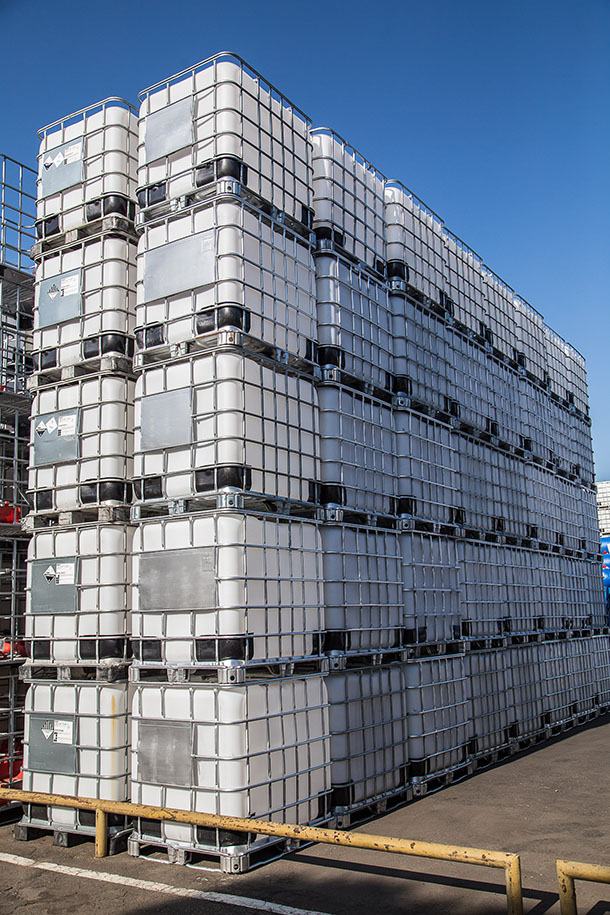
Source: Marco Torelli Fotografia / Shutterstock.com
What Are IBCs Made Of?
IBCs are available in three broad categories: plastic (composite), cardboard and steel.Plastic IBCs
Plastic IBCs (also known as composite IBCs) are the most common. These IBCs employ both plastic and steel in a two-part construction: a plastic container made of high-density polyethylene (HDPE) encased inside a protective stainless steel cage and pallet base. The steel cage protects the tank from impacts and lacerations, and the steel pallet base allows forklifts to move and transport them without the risk of punctures. Plastic IBCs are among the most versatile, suitable for transporting different substances: water, paints, solvents, coatings, various industrial chemicals and more. They are also ideal for rainwater collection. Shop Shipping Drums, Barrels & TotesCardboard IBCs
Cardboard or particleboard IBCs resemble large Gaylord boxes. A typical cardboard IBC is mounted on a standard wood pallet and fitted with a form-fitting plastic inner liner. If you’ve ever seen the liner poly bag in lithium-ion battery packaging, IBC liners function on a similar principle. They protect the IBC from being stained, damaged or destroyed by the substance it is intended to transport. The food industry frequently employs cardboard IBCs with food-grade liners to transport food products and ingredients, such as molasses, corn syrup, liquid chocolate, sodas or wine.Steel IBCs
Steel IBCs are typically stainless or carbon steel, known for their durability, long service life and corrosion resistance. Although far heavier than other types (a typical 350-gallon stainless steel IBC weighs about 470 lbs.), they are suitable for transporting flammables, combustibles and other substances that would be too hazardous to transport in another IBC type. A well-maintained steel IBC can last up to 10 years, making it one of the most cost-effective bulk transportation tanks available.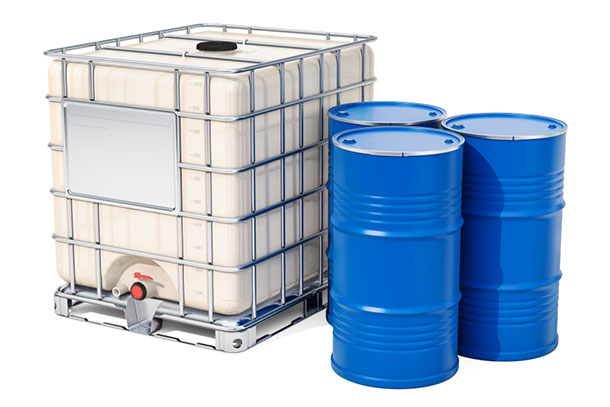
Source: AlexLMX / Shutterstock.com


