
What Do Bulkier Shipping Materials Mean for Warehouse Efficiency?
- By Cory Levins
- 20 jun 2018

Fulfillment and shipping needs vary drastically from one business to another based on product type, company branding and numerous other factors. One issue that many companies share, though, is the problem of inefficient warehouses. Whether you run a small, home-based business that ships just a few packages per day or a multi-million-dollar corporation that sends out thousands, inefficiency in your warehouse or the area where products are stored, packaged and shipped from can slow down your entire process.
Maybe you initially employed a system that worked well but no longer works now that your company has grown larger. Or maybe you’ve never had a particularly efficient warehouse. No matter what the case, there are several things that could be impacting your efficiency levels–including bulky shipping materials. How do bulky shipping materials impact warehouse efficiency, and what can you do to keep things running smoothly no matter what type of packaging materials you use? Let’s take a closer look.
Bulky Shipping Materials Take Up a Lot of Space
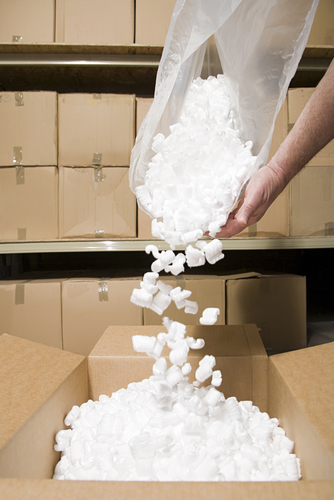
When you think about your warehouse storage needs, you likely give the most consideration to how much room you need for your products. If you use bulky shipping materials, though, you also need to think about how much room they are taking up. Consider packing peanuts, for example. Styrofoam peanuts come in massive bags containing 20 cubic feet of the lightweight material. If you are sending out a lot of packages, you probably need to have several bags on hand to avoid running out. Those bags take up a ton of space in your warehouse. They could get in the way or prevent you from having enough space to store products or package orders. Large rolls of bubble wrap also take up a lot of valuable square footage, which can lead to serious efficiency problems in smaller warehouses.
By making the switch to a more compact cushioning material, like air pillows, you can free up a significant amount of space. Freeing up space helps warehouses operate more efficiently by ensuring that there is plenty of room to store products, packaging, etc. in a neat and organized manner. It means workers will waste less time trying to find what they need, and they will be less likely to be injured trying to navigate around excess bulk in a cramped space. Space-efficient shipping materials like air pillow systems are much easier to move and store as well, so you will waste less time dealing with incoming shipments when you order more materials.
They Don’t Fit Well in Shipping Stations
To minimize the amount of time needed to prepare a package for shipment, you should have organized shipping stations in your warehouse. Things like scissors, tape, cushioning and packaging should all be kept close at hand so you or an employee doesn’t have to waste time hunting down the supplies needed to prepare a package.

Unfortunately, bulkier shipping materials don’t always fit well into organized stations. Small boxes and bags are much easier to keep close at hand than larger, bulkier ones. A large roll of shrink wrap can be installed at any shipping station and can be used to wrap thousands of small items before needing to be replaced. Individual corrugated boxes for thousands of small items, however, need a lot more space and will likely need to be stored elsewhere in the facility. Larger, bulkier shipping materials that need to be stored in a separate area away from the primary shipping station could slow down order fulfillment rates.
Bulky Materials Drive Up Shipping Costs
If your shipping costs are skyrocketing, your shipping materials could be to blame. Bulky packing and shipping materials add weight to packages, making them more expensive to ship. When selecting boxes and other materials, consider how much protection your products actually require. There is no need to mail something like a t-shirt in a thick corrugated cardboard box, for example, when sending it in a poly mailer would be much cheaper. Choose packaging that provides sufficient protection but realize that bulkier doesn’t always mean better. All that extra bulk could prevent your warehouse from sending out cost-efficient shipments.
While bulkier shipping materials are necessary in some situations, limiting your use of them can help your warehouse operate much more efficiently. The problems listed above are just a few of the issues associated with excessively bulky packing and shipping materials.


