
Six Reasons to Use a Shipping Pallet with Your Next Shipment
- By Cory Levins
- 24 feb 2019

The humble shipping pallet is a vital part of the engine of commerce. In 2017, the global pallet industry grew to $3 billion, and that figure is forecast to reach $4 billion by 2023. Why are pallets such an indispensable part of so many different industries? And what differences can they make for your business?
The short answer is that they make many of the common tasks of logistics and storage much easier. AirSea Containers’ shipping and packaging experts are here with the answers as to why. Read on to learn six reasons why palletizing your goods is a good idea and how it can improve your warehouse’s efficiency and performance.
1. Some carriers won’t ship your freight otherwise.
Pallets are part of the standard shipping method in almost every industry that ships freight. They make it quick and easy to unload trucks and containers, as well as streamlining tracking and organizing procedures.
Freight that is “floor loaded,” or stacked on the floor of a container without pallets, is more likely to shift in transit and often requires additional protection in the form of cargo straps or bars. For these reasons, many carriers don’t see floor loaded freight as worth the extra work to transport it safely. If you have to ship floor loaded goods, make sure to reach out to your logistics provider beforehand.
On the other hand, not all carriers require or even allow palletized goods. Some air freight carriers, in particular, prefer to ship without pallets to conserve weight and space. However, in most industries, you’re putting yourself at a disadvantage if you’re not palletizing your freight.
2. Pallets make goods much easier to move and handle.
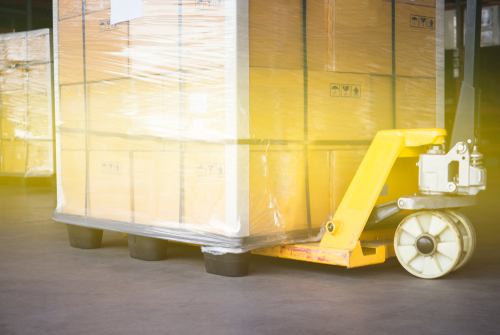
The forklift and the pallet go hand-in-hand. Together, the two technologies provide by far the simplest and fastest way to move product around a warehouse or loading dock. Most types of shipping pallet are designed specifically to be lifted and moved by a forklift.
Floor loaded freight is much more difficult and time-consuming to move without specialized equipment. Most palletized goods can be easily handled by any warehouse with standard pallet-handling equipment like forklifts and pallet jacks. If your goods aren’t stored on pallets, you’re taking away some of the most important tools that many warehouses use to handle freight.
3. Pallets open up different storage possibilities.
Many innovations in storage have been possible because of pallets. Forklift operators can place pallets on high shelves, opening up numerous vertical organization possibilities. Warehouses can store product two, three or more shelves high with just a simple slotting-in process. Without pallets, you’ll use up many labor hours just depositing and removing your product from high shelves—if you can use a vertical strategy at all.
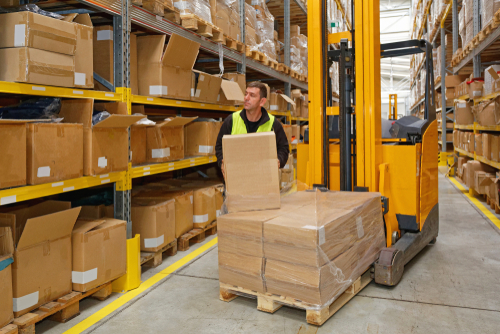
It’s important to remember to match the pallets you order to your warehouse organization strategies. Make sure that the pallet dimensions and specs fit your warehouse’s storage capacities and that your shelving is adequately rated for them before pursuing any vertically oriented storage strategy.
4. Palletizing goods enables effective tracking and counting of inventory.
Effective inventory management is a must for any warehouse, and pallets separate goods into units that are easy to count and track. By using inventory systems such as pallet barcode scanners, warehouse staff can efficiently monitor stock as well as inbound and outbound shipments by the barcode IDs on the pallets.
5. For some goods, pallets provide important air circulation.
Items like fresh produce need space to breathe. The gaps on the bottom of a standard pallet are vital for properly storing these items because they provide that necessary space for air currents to flow in and out. If you’re shipping produce or other items that need air circulation, pallets offer this benefit in a way that most other cargo organization methods can’t.
6. Most types of pallets are reusable.
Many pallets will be good for another several uses after shipping. In fact, 474 million used pallets were reclaimed in 2011, with 326 million resold as pallets and another 148 million recycled. Although many pallets unfortunately still end up in landfills, there’s plenty of ways to improve that with a little effort on your part. If you’re interested in making your shipping greener, committing to recycling or reusing your pallets is a great place to start.
Some businesses, of course, will get more out of palletized shipping than others. Small B2C businesses can often operate effectively with only parcel shipping. However, for B2B organizations especially, there are many good reasons why palletized shipping the industry standard is. Ultimately, it’ll be up to you to decide which offers the best fit.


