
Infectious Substance Packaging: Everything You Need to Know
- By Cory Levins
- 19 jun 2019

The transport of infectious substances is among the most delicate and heavily-regulated tasks that a freight shipper can undertake. The stakes are high, in terms of both the potential fines for non-compliant packaging and the potential harm to those handling the specimens. If your organization is starting to enter the realm of infectious specimen shipping, you’ll need to familiarize yourself with the key rules and find packaging solutions compliant with them.
At Air Sea Containers, we know that the secret to facing a challenge is to go in prepared. In this article, we’ll give you an introduction to the basics of shipping an infectious substance and how Air Sea’s packaging options can help you overcome the inherent challenges.
Before we begin, it’s important to note that this isn’t a comprehensive guide to shipping all potentially infectious materials. The substance you’re shipping may fall under additional rules, and you should make sure you’ve thoroughly researched the applicable laws before you package and ship it. With that in mind, let’s tackle the first question: how do you know which set of rules applies to your specimen?

Class A, Class B or Exempt: How to Tell the Difference
Infectious substances are generally classified into one of three categories:- Class A substances are high-risk specimens that are likely to cause harm to those who come into contact with them.
- Examples include HIV cultures, rabies cultures, the fungus Coccidioides immitis and Ebola-positive blood samples.
- Class B substances are low- or medium-risk specimens that may cause harm but don’t pose the immediate threat that Class A substances do.
- Examples include HIV-positive blood samples, some coli samples and replication-defective viral vectors.
- Exempt substances are specimens that can reasonably be expected not to present an immediate threat of harm.
- Examples include biopsy tissues, transplant tissues, presumed-healthy human blood.
Key Components of Infectious Substance Packaging
The CDC’s guidelines for infectious substance packaging lay out the essential components you’ll need to ship these substances safely. Although they vary between Class A and Class B, the basics are as follows:- Primary Receptacle: This vessel holds the specimen inside it. It must be watertight for Class A and leakproof or siftproof for Class B. Liquids need an absorbent packing material between the primary and secondary receptacles.
- Secondary Receptacle: This vessel encloses the primary receptacle. It must also be watertight for Class A and leakproof for Class B. It should be labeled with an itemized list of contents, and paperwork should be placed between the secondary receptacle and outer pack.
- Rigid Outer Packaging: A durable overpack box labeled with directional arrows, UN certifications, an infectious substance hazard label, shipper contact information and other key data.
Infectious Substance Packaging Solutions from Air Sea Containers
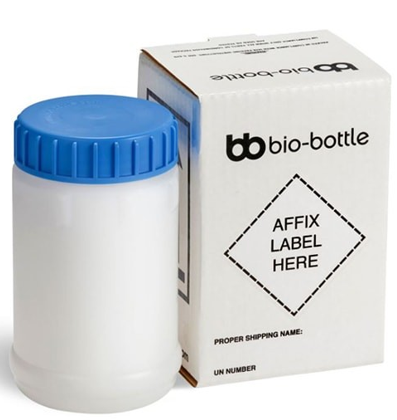
Air Sea Containers provides a range of high-performance infectious substance packaging solutions. Our infectious substance packaging materials are rigorously designed and tested for compliance with all relevant regulations. We also believe that safety shouldn’t be cost-prohibitive, so our solutions are competitively priced. A few of our many biological shipping solutions include:- Ambient Bio-Bottle Packaging Kit: A great all-around choice for both Class A and B. Includes a durable HDPE Bio-Bottle that serves as a secondary container, a rigid fiberboard box, plus bubble wrap and absorbent cushioning materials. It’s the perfect all-in-one kit to get your specimens on the road safely.
- 1L Bio-Freeze Pack: An all-in-one kit for cold specimens, this pre-freeze Bio-Bottle uses a cutting-edge refrigeration system to keep your specimen below 0º Celsius for up to 48 hours. This eliminates the need to use tricky, and potentially dangerous, dry ice when shipping biological materials.
- Bio-Pouch Specimen Kit: A flexible and cost-effective biological shipping solution that’s great for transporting everything from organ tissues to test tubes. Comes in a sturdy fiberboard box and includes everything you need, including absorbent pads and UN labels.
Ambient Bio-Bottle Packaging Kit
Air Sea Containers is proud to help our customers ship the most challenging cargo, so we offer dedicated solutions for shipping infectious substances. No matter what kind of specimen you have, where it’s going or how you’re shipping it, Air Sea Containers can help you find the answer you need. For more information, call us at (866) 596-9448 or contact us online.


