Hot Trends for Cold Chain Logistics: Advances in Temperature-Controlled Packaging, Technology and More
- By Cory Levins
- 8 jul 2019

In the rapidly-evolving logistics market of 2019, cold is the new hot. That might sound confusing to those unacquainted with refrigerated logistics, but for anyone who’s been following this growing field, it’s right on target.
The demand for refrigeration in the supply chain is greater than it’s ever been. Numerous trends are pushing toward an increased capacity for refrigeration in logistics, and the logistics market is scrambling to keep up and to evolve in order to meet the newest developments. The CAGR for refrigerated logistics is forecast to reach 2.5 percent in the period from 2017 to 2022, so the time is now for businesses looking to lock in their refrigeration solutions.
At Air Sea Containers, we always strive to keep up with the trends that matter the most to our customers. With the rapid growth in cold chain logistics, we’ve rolled out several new temperature-controlled packaging options to complement the increasing demand for them. We’ll take a look today at some of the trends pushing the industry in new directions—as well as how we’re helping our customers address them through innovative cold packaging solutions.
 Most market evolutions have a multitude of factors in play behind them, ranging from consumer demand to regulatory changes. Cold chain logistics is no different in this regard, and numerous industry trends have contributed to the meteoric growth of the cold chain logistics market:
 The market for shipping refrigerated pharmaceuticals and biological specimens is also in a historic period of expansion. Biopharmaceuticals, from relatively well-known commodities such as insulin and Gardasil to exciting new innovations in the field of interferons and interleukins, are among the biggest growth fields in pharmaceuticals, and biological testing services often require bulk transport of sensitive samples. Almost all of these products require temperature-controlled shipping in some capacity.
To compound the growth further, nutraceuticals are soaring in popularity. Probiotic supplements and products like kefir and kombucha are big business among health-conscious consumers, and these products often have sensitive temperature thresholds with little room for error. With the nutraceuticals market expected to reach $102.6 billion by 2024, those looking to capitalize on this exploding sector will need to make sure their cold chain capacity is robust.
Put together, all of these factors mean that refrigerated logistics has taken on a much bigger role. At the end of the day, the consumer’s choices and preferences are what drives the market, and consumers have made it clear that they’re looking for fresher products across the board.
The market for shipping refrigerated pharmaceuticals and biological specimens is also in a historic period of expansion. Biopharmaceuticals, from relatively well-known commodities such as insulin and Gardasil to exciting new innovations in the field of interferons and interleukins, are among the biggest growth fields in pharmaceuticals, and biological testing services often require bulk transport of sensitive samples. Almost all of these products require temperature-controlled shipping in some capacity.
To compound the growth further, nutraceuticals are soaring in popularity. Probiotic supplements and products like kefir and kombucha are big business among health-conscious consumers, and these products often have sensitive temperature thresholds with little room for error. With the nutraceuticals market expected to reach $102.6 billion by 2024, those looking to capitalize on this exploding sector will need to make sure their cold chain capacity is robust.
Put together, all of these factors mean that refrigerated logistics has taken on a much bigger role. At the end of the day, the consumer’s choices and preferences are what drives the market, and consumers have made it clear that they’re looking for fresher products across the board.
 That means that shippers and carriers alike have to step up their game when it comes to the traceability and standards of their cold chain. Every shipment must be traceable all the way back to its source and have verifiable records that it’s been shipped at the proper temperature. General capacity expansion is also necessary, thanks to the increased demand created by new regulations. Refrigerated logistics is a key component of food and pharmaceutical safety, and it’s never been more important that businesses find a solution that can simultaneously follow regulatory rules and hit budget targets.
 Many 3PLs, in turn, have capitalized on the demands of the new economy by focusing on creative solutions and value-added services. One example is the increasing prominence of 3PLs in food processing, with some logistics companies providing services such as high-pressure processing for killing microorganisms. Others have found value in creating sectional refrigerated trailers that can keep products in multiple temperature zones on the same trailer. No matter what the specific needs of the client, the theme for 3PLs is that versatility and expanded capacity are increasingly necessary.
Intermodal cold chain logistics are also experiencing a boom. The trucking capacity crunch and the increasingly global nature of consumer goods supply chains have combined to create a much greater role for sea, air and rail transport. Each of these transportation modes has its own set of rules and best practices, so businesses looking to implement intermodal solutions should ensure that they’re well-versed in IATA and IMO regulations.
Many 3PLs, in turn, have capitalized on the demands of the new economy by focusing on creative solutions and value-added services. One example is the increasing prominence of 3PLs in food processing, with some logistics companies providing services such as high-pressure processing for killing microorganisms. Others have found value in creating sectional refrigerated trailers that can keep products in multiple temperature zones on the same trailer. No matter what the specific needs of the client, the theme for 3PLs is that versatility and expanded capacity are increasingly necessary.
Intermodal cold chain logistics are also experiencing a boom. The trucking capacity crunch and the increasingly global nature of consumer goods supply chains have combined to create a much greater role for sea, air and rail transport. Each of these transportation modes has its own set of rules and best practices, so businesses looking to implement intermodal solutions should ensure that they’re well-versed in IATA and IMO regulations.
 At Air Sea Containers, we know that excellence in refrigerated packaging can make all the difference—so that’s what we strive to provide for our customers. Our advanced temperature-controlled packaging solutions provide great alternatives to dry ice and are often more environmentally friendly than competing options:
The Trends Driving Cold Chain Logistics
Most market evolutions have a multitude of factors in play behind them, ranging from consumer demand to regulatory changes. Cold chain logistics is no different in this regard, and numerous industry trends have contributed to the meteoric growth of the cold chain logistics market:
- Increased demand for fresh and locally-produced food, especially in the thriving meal kit market.
- Increased demand for refrigerated pharmaceuticals and nutraceuticals.
- Higher scrutiny for refrigerated food and pharmaceutical products under the FDA’s new Food Safety Modernization Act rules.
- Consumer demand for environmental consciousness in shipping and production practices.
- Increased prominence of third-party logistics carriers (3PLs) in the cold chain market.
Fresh is the New Frozen
Consumer standards for food have continued to increase for years. With Amazon snapping up Whole Foods in 2017, two of the consumer goods industry’s biggest names are consolidated into one grocery titan. However, even that behemoth faces competition from the still-surging meal kit industry, as well as grocery delivery services like Instacart and Peapod.The market for shipping refrigerated pharmaceuticals and biological specimens is also in a historic period of expansion. Biopharmaceuticals, from relatively well-known commodities such as insulin and Gardasil to exciting new innovations in the field of interferons and interleukins, are among the biggest growth fields in pharmaceuticals, and biological testing services often require bulk transport of sensitive samples. Almost all of these products require temperature-controlled shipping in some capacity.
To compound the growth further, nutraceuticals are soaring in popularity. Probiotic supplements and products like kefir and kombucha are big business among health-conscious consumers, and these products often have sensitive temperature thresholds with little room for error. With the nutraceuticals market expected to reach $102.6 billion by 2024, those looking to capitalize on this exploding sector will need to make sure their cold chain capacity is robust.
Put together, all of these factors mean that refrigerated logistics has taken on a much bigger role. At the end of the day, the consumer’s choices and preferences are what drives the market, and consumers have made it clear that they’re looking for fresher products across the board.
Focusing on Food and Pharma Safety
Food and pharmaceutical safety is another high priority for both cold shippers and cold chain logistics providers. Safety and standards have always been important, but recent changes in regulations have spurred shippers and carriers to upgrade their cold chain to meet new requirements. The FDA has finalized new rules based on 2011’s Food Safety Modernization Act, and they’re more laser-focused than ever on ensuring that food stays at its proper temperature. EU regulatory authorities also introduced new rules for pharmaceutical transport in 2013, requiring refrigerated transport for up to 80 percent of pharmaceuticals, including over the counter products. With big regulatory changes coming into play, businesses around the world are preparing themselves for further regulatory expansion and building their cold chain capacities accordingly.
That means that shippers and carriers alike have to step up their game when it comes to the traceability and standards of their cold chain. Every shipment must be traceable all the way back to its source and have verifiable records that it’s been shipped at the proper temperature. General capacity expansion is also necessary, thanks to the increased demand created by new regulations. Refrigerated logistics is a key component of food and pharmaceutical safety, and it’s never been more important that businesses find a solution that can simultaneously follow regulatory rules and hit budget targets.
Seeking Solutions in 3PL and Intermodal Logistics
Logistics costs are on the rise across the board, and the cold chain is certainly no exception. Many businesses have found that in this increasingly strenuous environment, it’s simply not feasible to operate their own refrigerated fleets. Thus, they’re turning to third-party logistics providers (3PLs) and intermodal transportation to find new solutions.Many 3PLs, in turn, have capitalized on the demands of the new economy by focusing on creative solutions and value-added services. One example is the increasing prominence of 3PLs in food processing, with some logistics companies providing services such as high-pressure processing for killing microorganisms. Others have found value in creating sectional refrigerated trailers that can keep products in multiple temperature zones on the same trailer. No matter what the specific needs of the client, the theme for 3PLs is that versatility and expanded capacity are increasingly necessary.
Intermodal cold chain logistics are also experiencing a boom. The trucking capacity crunch and the increasingly global nature of consumer goods supply chains have combined to create a much greater role for sea, air and rail transport. Each of these transportation modes has its own set of rules and best practices, so businesses looking to implement intermodal solutions should ensure that they’re well-versed in IATA and IMO regulations.
Cold Storage and Logistics in the Digital Age
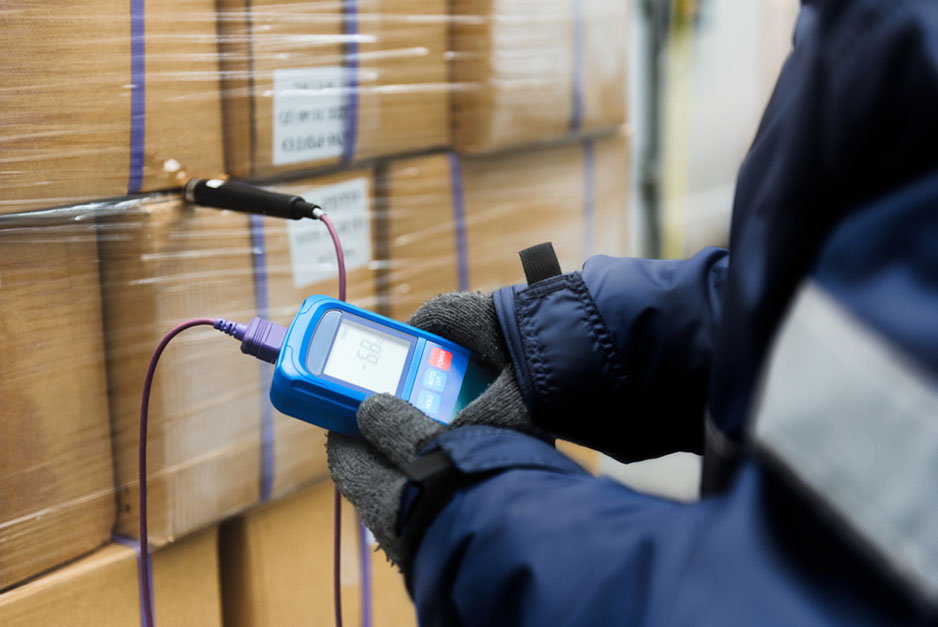
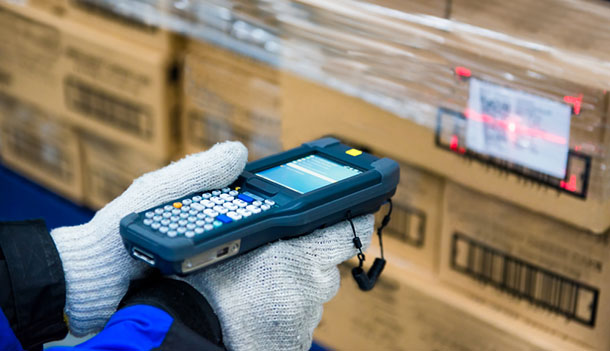
Cold storage and logistics have always favored companies which are willing to invest in technology solutions. That’s true now more than ever, and the reason is that cloud computing and IoT solutions are taking the cold chain by storm, to the tune of a likely $40 billion investment by 2020. These improvements promise to offer greater visibility, accountability and performance for cold chain shipping and storage. Many carriers now offer the option to remotely track the temperature of your shipments to ensure that they’re within acceptable limits. New IoT devices in trucks and warehouses enable remote temperature monitoring and automatic alerts if temperatures approach unsafe levels. These technology solutions help reduce the significant risk of a damaged product from temperature fluctuations and cooling system malfunctions. Cloud computing technology and global connectivity are also enabling cold chain logistics to become more responsive to customer needs. Thanks to increasingly sophisticated software that allows freight brokers around the world to communicate 24/7, businesses now have the tools to find the cold chain solutions that are right for them.
Greenifying the Cold Chain
21st-century consumers don’t just want their products quickly—many of them also demand that they’re produced and shipped using more environmentally friendly methods. Cold chain logistics, with its frequent use of refrigerants and high energy consumption, isn’t necessarily the poster industry for sustainability—but thanks to some new technical innovations, things might be heading in that direction. Expect to see the following technologies gain increasing prominence in cold chain logistics as demand for green solutions continues to grow:- Reducing waste through reusable temperature-controlled packaging materials (such as the options from Air Sea Containers listed below.)
- Using smart systems in cold warehouses to reduce energy and refrigerant usage.
- Taking steps to create more efficient routes and reduce idle time by using cutting-edge logistics software.
- Improving energy efficiency by using more sophisticated insulation methods.
- Reducing greenhouse gas emissions through the use of alternative fuels such as compressed natural gas (CNG) and electric vehicles.
- Exploring more eco-friendly refrigerant alternatives such as ammonia.
Temperature-Controlled Packaging from Air Sea Containers
With all of these factors converging in a historically tight logistics market, there’s no shortage of hurdles to clear in shipping refrigerated goods. This is often compounded by the limitations of the currently available refrigerated packaging methods: conventional solutions like dry ice require special expertise to handle safely, and some large carriers will not ship them.
At Air Sea Containers, we know that excellence in refrigerated packaging can make all the difference—so that’s what we strive to provide for our customers. Our advanced temperature-controlled packaging solutions provide great alternatives to dry ice and are often more environmentally friendly than competing options:
- Refrigerant Gel Packs: Air Sea Containers’ refrigerant gel packs are designed as a dry ice alternative that offers superior performance and safety. These solid-freeze gel packs are cost-effective, fully reusable, recyclable and biodegradable. They’re much easier and safer to work with than dry ice, and their non-toxic formula means you won’t risk contaminating your goods.
- 1L Bio-Freeze Pack: The Bio-Freeze system is an ideal choice for short-haul biological specimen shipping. After being pre-frozen, the Bio-Freeze bottle stays frozen for up to 48 hours and at ambient temperatures of up to 77º F thanks to its unique Pink Ice system. This kit also comes with all of the accessories you need to safely ship a biological specimen, including a UN-rated 4G carton, polystyrene cooler insert, infectious class warning label and more.
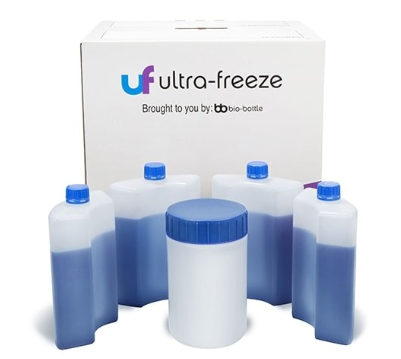
- Ultra-Freeze Plus Pack: For long-range transport of biological and infectious substances, the Ultra-Freeze Plus Pack gives you the sophisticated protection you need. This freezer bottle keeps specimens below 0ºC for up to seven days thanks to a special phase change technology. It’s been rigorously performance-tested by independent labs, so you can have confidence that your samples and pharmaceuticals are sufficiently chilled.
- Insulated Styrofoam Coolers: A great cost-effective solution for short-haul cold chain shipping, our insulated Styrofoam coolers are ideal for transporting everything from beverages to medical specimens. Try nesting another cooling device such as a Bio-Freeze pack inside for two layers of thermal protection. Use them with normal dry ice or upgrade to our reusable and non-toxic refrigerant gel packs for a cooler and greener solution.
- IntelliHeat Induction Heaters: Cold chain logistics might get most of the attention, but there’s still a significant need for heaters and heating blankets. Some adhesives and other chemicals can’t be exposed to cold temperatures—so, when you need to ship in cold weather, it’s important to have the right solutions on deck. These IntelliHeat induction heaters are a truly best-in-class solution, with its single induction coil design that heats steel drums safer, more quickly and more reliably. Perhaps best of all, its ultra-efficient design can save you up to 50 percent in energy costs versus traditional heating solutions such as steam ovens.
Ultra-Freeze Plus Pack
Air Sea Containers is a proud partner to our customers in creating safer, more reliable, and more cost-effective cold shipping solutions. We know that it’s challenging to thrive in such a competitive and performance-focused industry, so we do our best to help our customers keep up by providing the gold standard in refrigerated packaging. To learn more about how we can help keep your products cold, call Air Sea Containers at (866) 596-9448 or contact us online!