
Glass Jug vs. Plastic: What Type of Carboy Should I Use for Beverage Fermentation?
- By Cory Levins
- 12 nov 2018

Anyone thinking of getting into the world of home brewing faces the dilemma of choosing their first fermenter. There is so much conflicting information out there, and it really comes down to a matter of preference. In most cases, brewers use glass jugs known as carboys and fermentation buckets. Keep in mind that how well you can clean and sanitize your fermenter will have a direct influence on the quality of your beer.
What Is Fermentation?
Fermentation is the process by which microorganism take in food and convert it to other substances. During the conversion, the microorganisms also give off waste. In brewing, the microorganism in question is yeast, which eats sugar and converts it to alcohol while giving off carbon dioxide in the process. If your fermenter is not properly cleaned and sanitized, other organisms may be present. This is referred to as an infection. These organisms eat different components of the recipe, which will change the flavor and generally make the beer sour. However, just because your brew is infected doesn’t always mean you need to dump it. You could end up with a great tasting sour beer instead.
What Is a Carboy? Do You Need One?
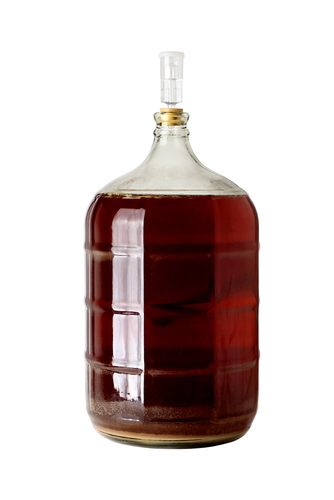
Starter home brew kits come with a bucket fermenter and a carboy. You may be asking yourself what, exactly, a carboy is. The name comes from the Persian word “qarābah” or the Arabic word “qarrāba,” which both translate as “big jug.” Most home brewers start the fermentation process using plastic buckets, while glass or plastic jugs are used during the second part of fermentation.
Why use buckets? First, when pouring from the boil kettle into a bucket with a wide mouth, there’s no need for a funnel. If you plan on adding dry hops or other flavors, it’s very easy to pull the lid back and add the ingredients or pull hydrometer samples. Buckets are also very easy to clean. There’s plenty of room to get in there and scrub.

When to Use a Carboy
Primary fermentation can be done in a carboy if you choose. However, carboys may not provide enough room and may require the addition of a blow-off tube. Most people prefer carboys for secondary fermentation and aging because they make it easier to reduce the amount of beer that comes into contact with air, reducing the chance of oxidation or infection. Carboys are available in either plastic or glass. Some brewers claim that fermenting in glass gives better flavor. Plastic, on the other hand, is less expensive and less likely to break if you happen to drop it. However, both types of carboy can be difficult to clean because of the narrow opening.
If you plan to age your beer for extended periods, the glass carboy is the way to go. Glass cannot be permeated by air, and when fitted with a rubber stopper, a glass carboy will maintain a proper seal for months. Plastic carboys, on the other hand, can have attachments designed just for them. They can also be shaped in a way that makes bottling easier. Glass carboys can be heavy and awkward to move, especially when full, so take care when setting up your area to try to minimize the amount of moving you will need to do. Just remember that if you plan to use a carboy, you will need a large bottle brush for cleaning.
Most carboys and fermentation buckets hold at least 5 gallons, but it is possible to do smaller batches. If you wanted to experiment with some different flavors in a particular batch, you could always do a secondary fermentation divided into smaller jugs and add different ingredients to each and decide which one you like better.
The Bottom Line: Plastic or Glass?
What carboy should you choose: plastic or glass? The choice is yours. Each has its own pros and cons. If you are just starting out, plastic is probably the way to go because it will be less expensive to get brewing. As you gain experience and delve into more advanced techniques, you may decide that you want or need a few glass carboys. There is no right or wrong answer to the question. Just choose what you are most comfortable with and start there.


